Corporate: Sanepa, Laltipur, Nepal Factory: Bardaghat, Nawalparasi, Nepal

HDPE Pipe Installation: Guide for Homes, Farms, and Projects in Nepal
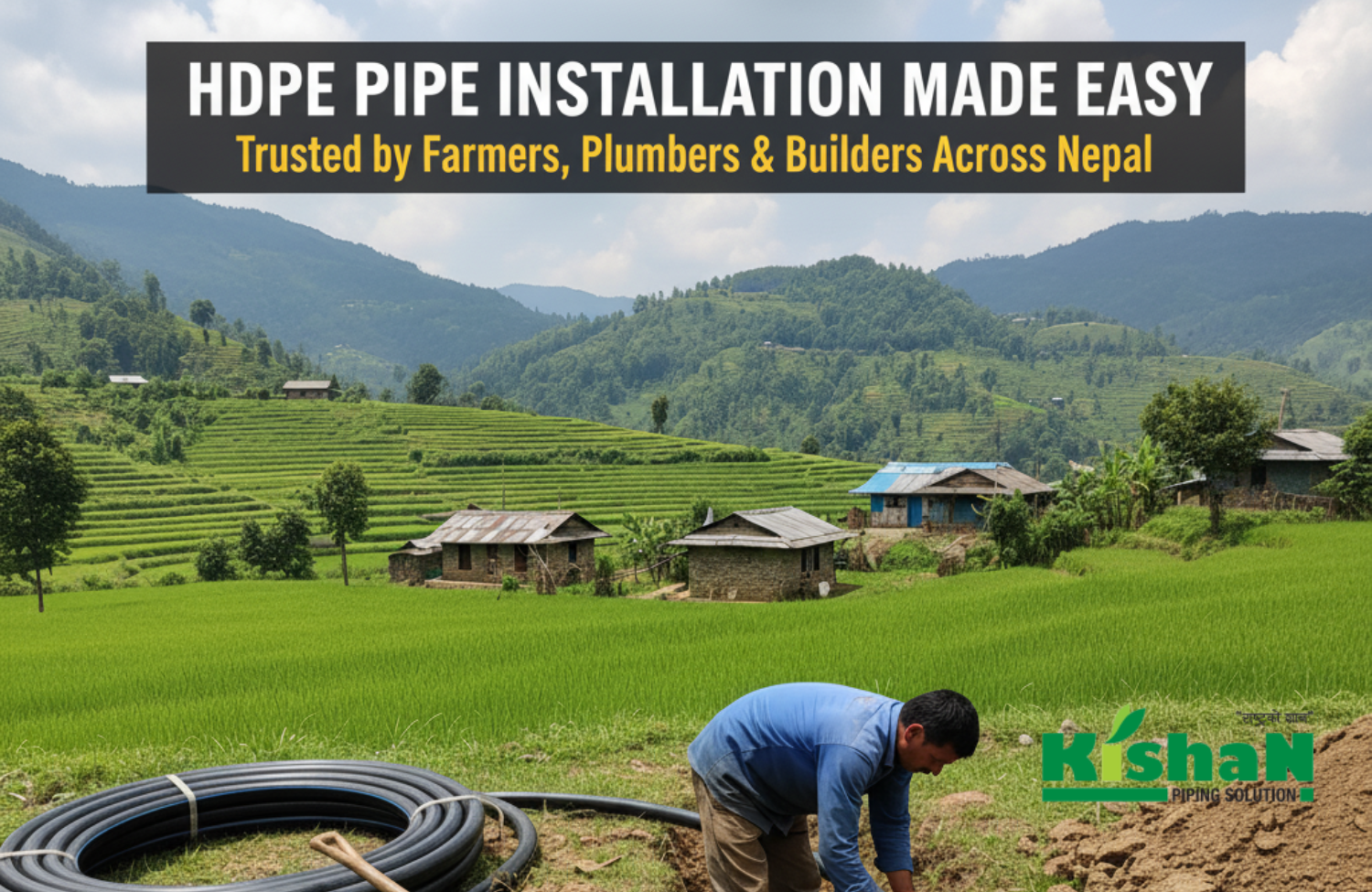
HDPE pipe installation is one of the best ways to set up a strong and long-lasting water system in Nepal. Whether you are building a home, farming land, or managing a community project, using HDPE pipes (High-Density Polyethylene pipes)can help save water, reduce leaks, and last for many years. This guide will explain everything you need to know about HDPE pipe installation in simple steps.
HDPE pipe installation is now common across Nepal because it is strong, flexible, and does not rust or break easily. It works well in cities, villages, hills, and flat lands. With proper care, an HDPE pipe installation can last more than 50 years with little maintenance. In this article, we will cover why HDPE pipes are good, how to install them step by step, and what mistakes to avoid during HDPE pipe installation.
Why Choose HDPE Pipes for Your Project?
Before starting HDPE pipe installation, it helps to know why these pipes are better than others. HDPE pipes are made from a special plastic that can handle pressure, heat, and cold. They do not corrode like metal pipes and do not become brittle like normal PVC when exposed to sunlight. They are also safe for carrying drinking water and are widely used in:
- Home plumbing
- Farm irrigation
- Rainwater harvesting
- Village water supply systems
- Underground water lines
Because HDPE pipes are lightweight and come in long coils, they are easier to carry and install, even in hard-to-reach places.
Step-by-Step HDPE Pipe Installation Process
Doing a correct HDPE pipe installation means following clear steps. Here is a simple method anyone can follow.
Step 1: Plan the Layout
Start by drawing a rough map of where the water will flow. Mark where the source is (like a tank, borewell, or river), and where the water is needed (house, field, tap stand). Make sure the path avoids heavy traffic areas, trees, and future construction zones. A good plan makes HDPE pipe installation faster and safer.
Step 2: Prepare the Trench
Dig a trench along the planned route. The depth depends on where you are installing:
- For homes: dig 60 to 90 cm deep
- For farms: 75 to 100 cm deep
- Under roads: at least 120 cm deep
The bottom of the trench should be smooth. Remove stones, bricks, or sharp objects. Lay a 5 to 10 cm layer of fine sand to protect the pipe.
Step 3: Unroll and Place the Pipe
Unroll the HDPE coil slowly along the trench. Do not drag it over rough ground as this can cause scratches. Lay the pipe gently into the trench. Support it every 1 to 1.5 meters so it does not sag or bend too much.
Step 4: Join the Pipes Using Fusion
One big reason HDPE pipe installation lasts so long is because of fusion joints. These joints are strong and leak-free. There are two types of joining methods:
- Butt fusion: for large pipes (above 63mm)
- Electrofusion: uses fittings with built-in heating wires
Always join pipes on a clean, flat surface before placing them in the trench. After joining, wait for the joint to cool fully.
Step 5: Pressure Test the System
Before covering the pipe, test it for leaks. Close all ends and fill the pipe with water under pressure. Use a pressure gauge to check if the level stays steady for 30 minutes. If pressure drops, find the leak and fix it. Never backfill a pipe that has not been tested.
Step 6: Backfill the Trench
Once the test passes, cover the pipe with 15 to 20 cm of soft soil or sand. Do not use broken bricks or stones. Then add the rest of the soil in layers, pressing down lightly to avoid air pockets. Do not compact too hard. It is smart to place a red warning tape above the pipe so people know there is a water line below when digging later.
Common Mistakes During HDPE Pipe Installation
Even good materials fail if installed wrong. Here are some common errors to avoid:
- Not cleaning pipe ends before fusion: Dirt or dust weakens the joint.
- Bending the pipe too sharply: This can block water flow. Always follow the minimum bend radius.
- Using wrong fusion settings: Heat and pressure must match pipe size.
- Skipping the pressure test: Hidden leaks waste water and damage the system.
- Backfilling with sharp materials: Rocks can cut the pipe over time.
Avoiding these mistakes makes your HDPE pipe installation reliable and long-lasting.
Where Is HDPE Pipe Installation Most Useful?
HDPE pipe installation is useful in many places across Nepal. In villages, it helps bring clean water from springs or rivers to homes without losing water to leaks. On farms, HDPE pipes support drip and sprinkler systems that save water and improve crop growth. For homes and buildings, underground HDPE lines connect tanks to bathrooms and kitchens safely. Municipal projects also use HDPE pipe installation for city water supply and drainage due to its strength and low maintenance.
Tips for Successful HDPE Pipe Installation
Follow these tips to get the best results:
- Buy ISI-marked HDPE pipes from trusted brands like Kishan Pipe and fittings.
- Use trained workers for fusion work. Poor joints are the main cause of failure.
- Keep extra pipe and fittings on hand for repairs.
- Label both ends of the line for future reference.
- Protect exposed parts with UV-resistant covers.
Good planning and careful HDPE pipe installation save money and trouble in the long run.
Maintenance After Installation
After HDPE pipe installation, very little care is needed. But it helps to:
- Check pressure levels once a month.
- Look for wet spots or sinking soil that may mean a leak.
- Flush the system once a year to remove buildup.
- Keep records of the layout for repairs.
Because HDPE does not rust or scale, it stays clean inside and flows well for years.
Why Kishan Pipe Is Trusted for HDPE Pipe Installation
Kishan Pipe provides high-quality HDPE pipes and full support for installation. We offer:
- Pipes in all sizes (20mm to 250mm)
- Free advice on layout and depth
- Training for fusion welding
- Fast delivery across Nepal
Our pipes are tested for strength and safety. Many customers trust Kishan Pipe for home, farm, and government projects. We also help with HDPE pipe installation plans and can suggest local experts if needed.

Final Thoughts on HDPE Pipe Installation
HDPE pipe installation is a smart choice for anyone who wants a clean, safe, and lasting water supply. It works in all parts of Nepal and suits homes, farms, and large projects. With the right tools, materials, and care, you can build a system that runs smoothly for decades. Remember to plan well, use good pipes, and never skip testing. Choose HDPE pipe installation for less waste, fewer repairs, and peace of mind.
Frequently Asked Questions (FAQs)
1. What is HDPE pipe installation?
HDPE pipe installation is the process of setting up High-Density Polyethylene pipes for water supply, irrigation, or drainage. It includes laying, joining, testing, and burying the pipes.
2. Why is HDPE pipe installation better than other types?
It is better because HDPE pipes do not rust, have strong joints, resist weather, and last over 50 years with little maintenance.
3. Can I do HDPE pipe installation myself?
You can lay the pipe yourself, but fusion joining needs special tools and training. It is best to hire skilled workers for joining.
4. How deep should I bury the pipe during HDPE pipe installation?
Bury at least 60 cm deep in normal soil. Go deeper (up to 120 cm) under roads or in rocky areas.
5. Do HDPE pipes need special glue?
No, HDPE pipes do not use glue. They are joined by heat fusion, which makes a strong, permanent bond.
6. Are HDPE pipes safe for drinking water?
Yes, HDPE pipes are safe and approved for carrying clean drinking water.
7. How long does HDPE pipe installation take?
It depends on the length and site. A small home system may take 1–2 days. Large farm or village systems may take a week or more.
8. Can HDPE pipes be used above ground?
Yes, but they should be covered with paint or sleeve to protect from sunlight.
9. Where can I buy materials for HDPE pipe installation in Nepal?
You can buy from Kishan Pipe. We sell pipes, fittings, and tools for full HDPE pipe installation.
10. Does HDPE pipe installation cost more than PVC?
It may cost more at first, but HDPE saves money over time because it lasts longer and has no leaks.