Corporate: Sanepa, Laltipur, Nepal Factory: Bardaghat, Nawalparasi, Nepal

PVC Pipes in Nepal: Complete Kishan Pipe Guide on Types, Uses & Buying Tips
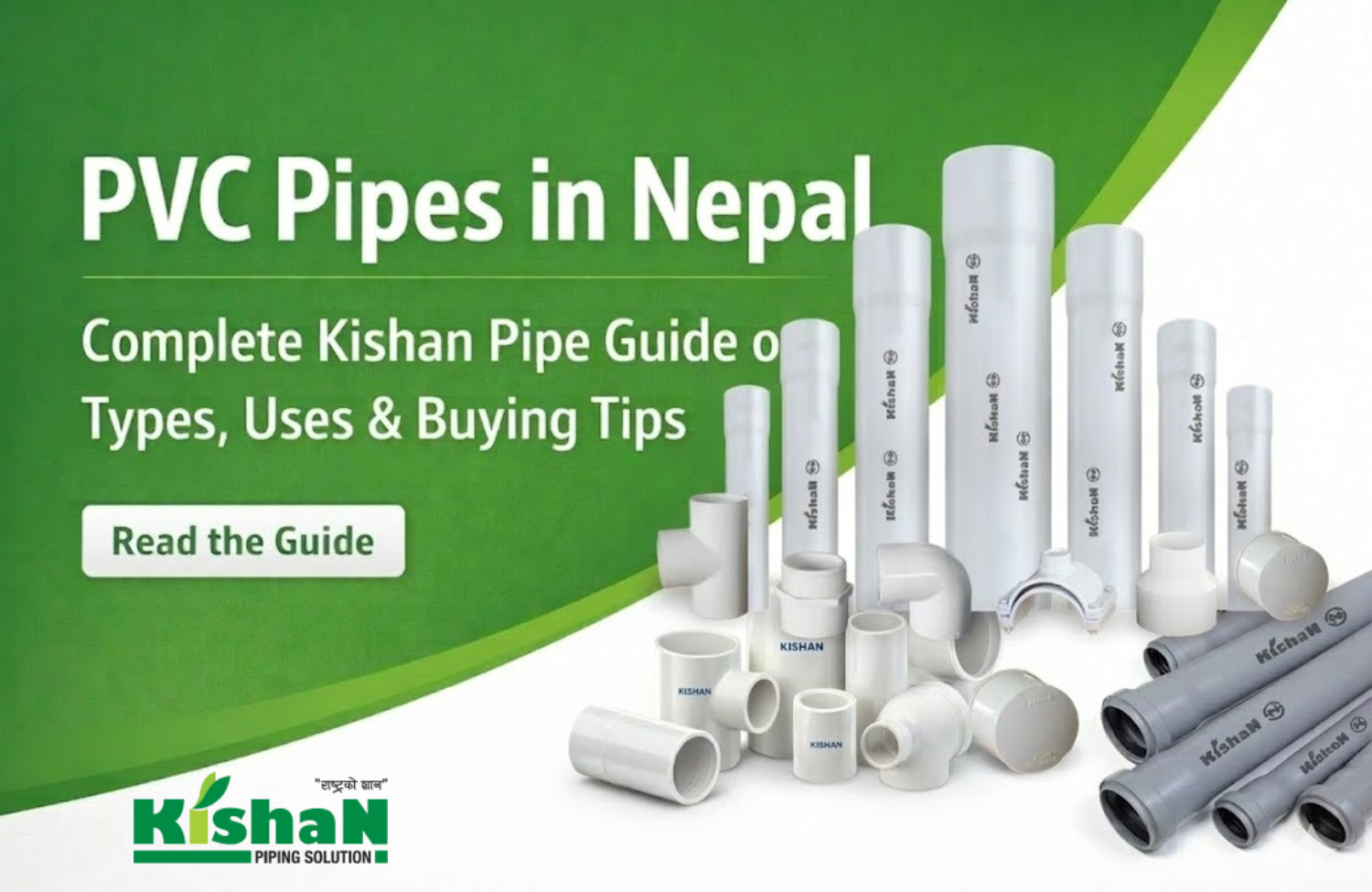
PVC pipes in Nepal have become one of the most widely used piping solutions l for plumbing, irrigation, and drainage systems. Known for their durability, corrosion resistance, and affordability, these pipes are commonly used in residential, agricultural, and municipal projects. Understanding the different types of PVC pipes in Nepal, their applications, pressure ratings, and quality standards can help buyers and contractors select the right piping solution for their projects.
In this guide, we explore the key factors affecting PVC pipe pricing, common types of PVC pipes available in Kishan Pipe, their applications, and important tips to consider before purchasing.
What Are PVC Pipes?
PVC (Polyvinyl Chloride) pipes are plastic pipes widely used in water supply, drainage, and irrigation systems. Because they are lightweight and corrosion-resistant, PVC pipes have replaced traditional metal pipes in many construction and infrastructure projects.
Some important advantages of PVC pipes include:
- High resistance to corrosion and chemicals
- Lightweight and easy to transport and install
- Smooth inner surface for efficient water flow
- Long lifespan with minimal maintenance
- Cost-effective compared to many other piping materials
Due to these advantages, PVC pipes are commonly used across Nepal in both urban and rural infrastructure projects.
Why PVC Pipes Are Popular in Nepal
PVC pipes are widely used across Nepal because they are durable, lightweight, and suitable for many infrastructure and construction applications. Their corrosion resistance and long service life make them a reliable solution for both small household projects and large-scale development works. Some of the most common applications of PVC pipes in Nepal include:
1. Potable Water Supply
PVC pipes are commonly used for drinking water distribution systems in residential areas and municipal supply networks. Their smooth internal surface allows efficient water flow while maintaining water quality.
2. Sewage Systems
PVC pipes are widely used in sewage and drainage systems because they are resistant to corrosion and chemical attack. They are capable of efficiently handling wastewater flows in both urban and rural sanitation infrastructure.
3. Slurry Lines
PVC pipes are also used in slurry transportation systems, especially in hydropower projects across Nepal. These pipelines help transport water mixed with sediment or slurry materials during construction and operational processes.
4. Irrigation
In agricultural regions of Nepal, PVC pipes are commonly used for irrigation systems. They help distribute water efficiently across farms and fields, supporting crop growth and water management.
5. Cable Ducting
PVC pipes are often used as protective conduits for electrical and communication cables. Their durability and insulation properties help protect cables from moisture, soil pressure, and physical damage.
Size, Diameter, and Pressure Rating of PVC Pipe Available in Kishan Pipe
1. Pipe Size and Diameter
Common sizes available in Nepal include:
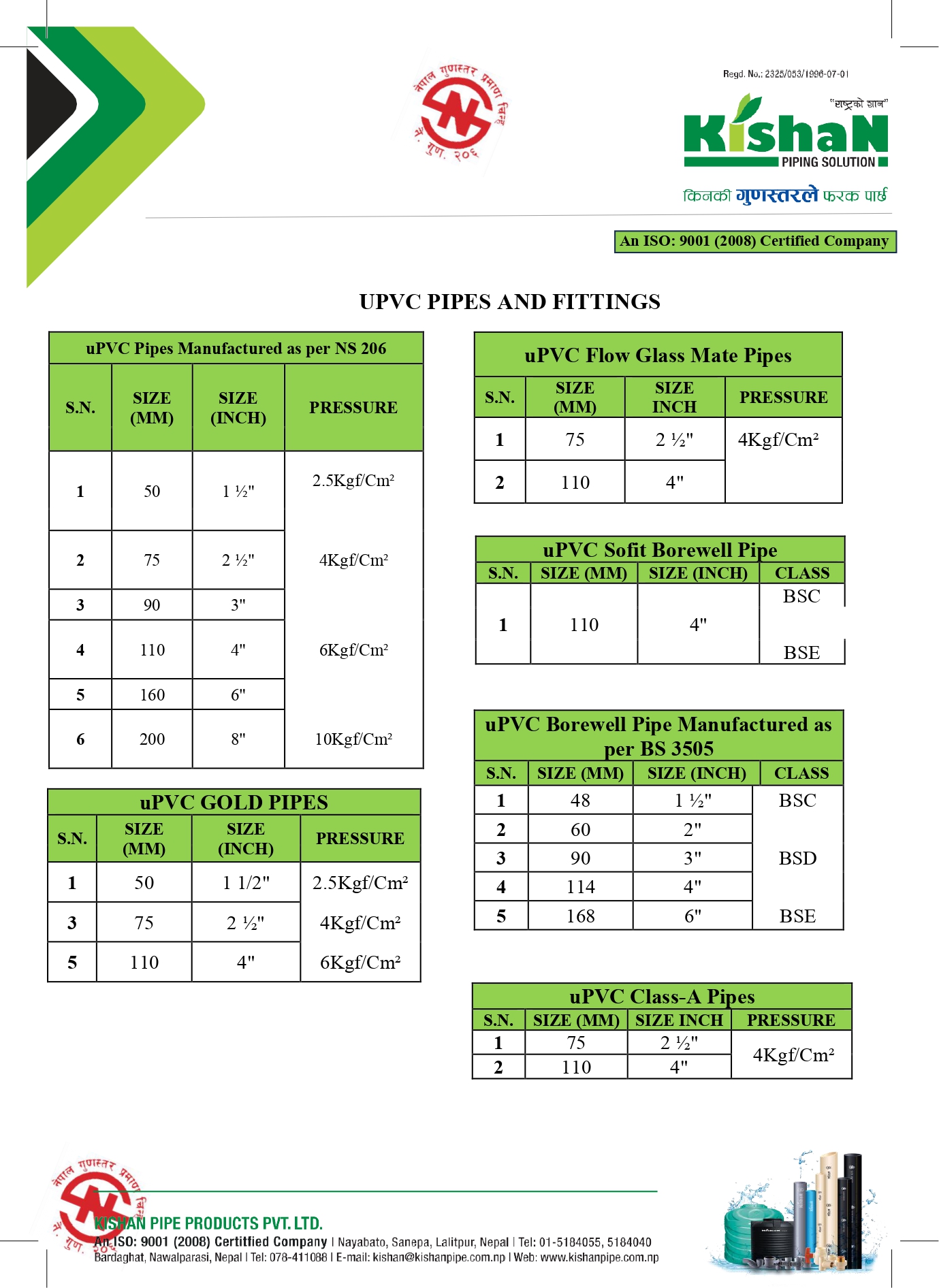
- 50 mm (1½ inch)
- 75 mm (2½ inch)
- 90 mm (3 inch)
- 110 mm (4 inch)
- 160 mm (6 inch)
- 200 mm (8 inch)
Larger pipes are often used in drainage systems or municipal water distribution networks.
2. Pressure Rating
PVC pipes are manufactured with different pressure capacities depending on their application.
Examples include:
- 2.5 KgF/cm² for low-pressure systems
- 4 KgF/cm² for medium-pressure applications
- 6 KgF/cm² for water supply systems
- 10 KgF/cm² for higher pressure applications
Pipes with higher pressure ratings require thicker walls and stronger materials, which increases the price.
3. Raw Material Quality
The quality of PVC resin used during manufacturing significantly affects pipe durability and performance. Pipes made from high-quality virgin PVC offer greater strength and longer service life. Higher-quality raw materials may slightly increase the price but provide better long-term value.
4. Manufacturing Standards
Pipes manufactured under recognised standards ensure consistent quality and safety.
For example, uPVC pipes manufactured to the NS 206 standard are widely used in Nepal for plumbing and water distribution systems.
Certified pipes undergo several quality checks, including:
- Pressure testing
- Dimensional accuracy checks
- Material quality verification
These processes influence the overall product quality.
Quality and Certification of Kishan Pipe PVC Pipes
Quality certification plays an important role in ensuring the reliability and long-term performance of PVC pipes. Kishan Pipe manufactures PVC and uPVC pipes in accordance with recognised quality standards such as Nepal Standard (NS) 206, ensuring consistent wall thickness, adequate pressure resistance, and safe material composition suitable for various applications.
Each pipe is produced under strict quality-control processes to maintain durability and performance in real-world conditions such as water supply systems, irrigation networks, and infrastructure projects. By following certified manufacturing standards, Kishan Pipe ensures its PVC pipes meet the performance requirements for Nepal’s diverse geographic and environmental conditions, delivering dependable performance, reduced leakage risk, and long service life.
Choosing certified PVC pipes from a trusted manufacturer like Kishan Pipe helps ensure better quality, durability, and reliability for both residential and large-scale pipeline installations.
Types of PVC Pipes Available in Kishan Pipe
Different types of PVC pipes are manufactured to serve various applications.
1. uPVC Pipes
Unplasticized PVC (uPVC) pipes are rigid pipes commonly used for water supply systems and plumbing installations.
2. uPVC Gold Pipes
These pipes are designed for plumbing systems that require reliable pressure resistance and durability.
3. uPVC Flow Glass Mate Pipes
Flow glass mate pipes are used in specialised plumbing applications where smooth water flow and durability are important.
4. uPVC Borewell Pipes
Borewell pipes are specifically designed for groundwater extraction systems. They are available in different sizes and classes, such as BSC, BSD, and BSE, according to strength requirements.
PVC Pipes vs Other Materials (HDPE/CPVC): What You Should Know
Different types of plastic pipes are used in construction and water systems, each suited for specific applications.
Both PVC and HDPE pipes are used for different purposes and have their own advantages.
PVC pipes are generally rigid and commonly used for plumbing, drainage, and household water supply systems. On the other hand, HDPE pipes are more durable and are typically used for underground pipelines, irrigation systems, and high-pressure water distribution.
CPVC pipes are primarily used for hot and cold water plumbing systems due to their ability to withstand a wide range of temperatures. They are commonly found in residential applications. The choice between these materials depends on the application, pressure requirements, and installation conditions.
For a detailed comparison, read
1. PVC and HDPE: Understanding the Differences and Applications in Nepal
2. Comparing UPVC and CPVC Pipes: Which is Right for Your Project?
Tips Before You Buy PVC Pipes in Nepal
Before purchasing PVC pipes, consider the following factors:
- Check the pipe size and diameter required for your project
- Verify the pressure rating suitable for the system
- Ensure the pipes follow recognised manufacturing standards
- Check the raw material quality used during production
- Choose a reliable manufacturer or supplier
These steps help ensure that the piping system performs efficiently and lasts longer. For a detailed breakdown of PVC pipe prices in Nepal, read our other blog, PVC Pipe Price in Nepal 2026: What Affects Cost & How to Choose
Why Quality and Manufacturer Choice Matter
Selecting a reliable manufacturer is essential when purchasing PVC pipes. High-quality pipes are produced using advanced manufacturing processes and strict quality control standards.
A trusted manufacturer ensures:
- Consistent product quality
- Accurate pipe dimensions
- Reliable pressure resistance
- Proper certification and testing
Choosing a reputable manufacturer helps avoid problems such as pipe leakage, cracking, or premature failure.
uPVC Pipes in Nepal (Manufactured as per NS 206 Standard by Kishan Pipe)
In Nepal, uPVC pipes manufactured to the NS 206 standard are commonly used in plumbing and water supply systems. These pipes are available in various sizes and pressure ratings to suit different applications.
Typical sizes include:
- 50 mm (1½ inch)
- 75 mm (2½ inch)
- 90 mm (3 inch)
- 110 mm (4 inch)
- 160 mm (6 inch)
- 200 mm (8 inch)
These pipes are designed to handle pressure ratings ranging from 2.5 KgF/cm² to 10 KgF/cm², depending on the system requirements.
Understanding Pressure Ratings in PVC Pipes
The pressure rating indicates how much internal water pressure a pipe can safely withstand.
Common pressure ratings include:
- 2.5 KgF/cm² – Light-duty plumbing systems
- 4 KgF/cm² – Medium pressure water supply
- 6 KgF/cm² – Standard municipal supply systems
- 10 KgF/cm² – High-pressure applications
Choosing the correct pressure rating ensures the pipe performs safely and efficiently.
Choosing the Right Size and Application Type
Selecting the correct pipe size is important for maintaining proper water flow and system efficiency.
For example:
- Small pipes (50–75 mm) are commonly used for residential plumbing.
- Medium pipes (90–110 mm) are used for drainage and water supply systems.
- Large pipes (160–200 mm) are used for infrastructure or municipal projects.
Choosing the right size helps avoid pressure loss and improves overall system performance.
Why Certified uPVC Manufacturing Standards Matter
Manufacturing standards ensure that PVC pipes meet required safety and performance levels. Certified pipes are tested for strength, pressure resistance, and durability before they reach the market.
Pipes produced according to recognised standards such as NS 206 provide consistent quality and reliable long-term performance. These standards also ensure that pipes can withstand varying environmental conditions and operating pressures.
How to Get the Best PVC Pipes in Nepal Without Compromising Quality
When purchasing PVC pipes, buyers should focus on both price and quality. While comparing prices is important, selecting certified pipes from a trusted manufacturer ensures better long-term value.
Kishan Pipe manufactures reliable uPVC pipes and fittings designed for plumbing, irrigation, and water distribution systems in Nepal. With a range of pipe sizes and fittings, the company focuses on high-quality manufacturing processes and durable piping solutions suitable for Nepal’s diverse applications.
Explore our Products:
1. CPVC Pipes
3. Water Tank
4. HDPE Pipe
Need help choosing the right PVC pipes?
Contact us today to explore our range of certified PVC and uPVC pipes suitable for different applications and project requirements.
Call us: 01-5184040, 9779801106035
Conclusion
PVC pipes are an essential part of modern infrastructure in Nepal, supporting a wide range of applications, including potable water supply, sewage systems, irrigation networks, slurry lines for hydropower projects, and cable ducting. Their durability, corrosion resistance, and ease of installation make them a reliable solution for both residential and large-scale development projects.
Understanding the different types of PVC pipes, pressure ratings, applications, and manufacturing standards helps buyers choose the right piping solution for their specific needs. Selecting pipes that meet recognised quality standards ensures better performance, long service life, and dependable operation in real-world conditions.
Manufacturers like Kishan Pipe focus on producing high-quality PVC and uPVC pipes that meet Nepal’s infrastructure and construction requirements. With a focus on quality manufacturing and adherence to recognised standards, Kishan Pipe continues to support Nepal’s infrastructure development by delivering reliable PVC piping solutions for water supply, irrigation, and construction projects nationwide.
FAQs
1. What standards are used for PVC pipes in Nepal?
Most quality PVC pipes in Nepal are manufactured according to standards such as NS 206, which ensures proper pressure resistance, durability, and safe material composition
2. What sizes of PVC pipes are available in Nepal?
Common PVC pipe sizes range from 50 mm to 200 mm, depending on the application and pressure requirements.
3. Are PVC pipes suitable for drinking water systems?
Yes, certified PVC pipes manufactured according to proper standards are suitable for drinking water distribution. However, only unplasticized PVC (uPVC) pipes are typically used for potable water supply because they do not contain plasticisers and help maintain water quality.
4. What are PVC pipes in Nepal commonly used for?
PVC pipes in Nepal are commonly used for potable water supply, sewage systems, irrigation networks, slurry lines in hydropower projects, and cable ducting.
5. How do I choose the right PVC pipes in Nepal?
When selecting PVC pipes in Nepal, consider factors like pipe diameter, pressure rating, application type, and whether the pipe meets recognised quality standards.