Corporate: Sanepa, Lalitpur, Nepal Factory: Bardaghat, Nawalparasi, Nepal

HDPE Pipe Price in Nepal: Complete Guide on Types, Uses & Buying Tips
When planning plumbing, irrigation, or water distribution systems, one of the most common searches is for HDPE pipe prices in Nepal. Buyers want cost clarity, but pricing alone doesn’t tell the full story. To make a smart purchase decision, you need to understand the types of HDPE pipes, market factors affecting pricing trends, installation benefits, and how to choose the right product for your project.
This guide will help you understand the factors that influence HDPE pipe prices in Nepal, how different applications affect cost considerations, and what to keep in mind before making a purchase.
What Are HDPE Pipes?
HDPE (High-Density Polyethylene) pipes are Consistent, durable, and widely used across Nepal for water distribution, agricultural irrigation, underground systems, sewer lines, and industrial applications.
They are known for:
- High resistance against corrosion
- Durable under soil movement
- Excellent performance in varied climates
- Ease of installation and maintenance
If you want to know more about HDPE pipe, you can check out our other blog, Everything You Need to Know About HDPE Drainage Pipe
Why HDPE Pipes are Popular in Nepal
HDPE pipes have become a preferred choice in many projects due to their adaptability:
- Agricultural Irrigation Systems: Their durability and resistance to cracking make them ideal for uneven terrains in the Terai and mid-hill regions.
- Water supply and sanitation: HDPE pipes are widely used in drinking water distribution and sanitation systems due to their leak-proof joints, corrosion resistance, and long service life. Their smooth inner surface ensures efficient water flow, while their durability makes them suitable for both urban and rural water infrastructure projects.
- Underground Water Distribution: They withstand soil pressure and movement.
- Municipal Projects: Used in sewer lines, stormwater management, and municipal water systems.
This widespread usage helps explain why demand often influences HDPE pipe prices in Nepal, especially during peak agricultural seasons and infrastructure drives.
Factors That Influence HDPE Pipe Price in Nepal
The price tag on a PVC pipe isn’t just about diameter. Several real-world factors determine cost. When buyers compare hdpe pipe price in Nepal, several factors come into play:
1. Material Quality and Grade
Not all HDPE pipes are manufactured to the same standard. Pipes made from PE-100 virgin raw materials offer higher tensile strength, improved pressure resistance, and better long-term performance under varying climatic conditions. Such quality differences directly affect durability, reliability, and overall market value perception.
2. Pipe Size and Wall Thickness
HDPE pipes are available in multiple diameters and pressure ratings. Larger diameters and thicker walls are designed to handle higher pressure or larger volumes, and this typically affects the hdpe pipe price in Nepal.
3. Supply and Seasonal Demand
Like many construction products, HDPE pipes can experience pricing fluctuations due to seasonal demand. For example, irrigation projects during the planting season and municipal contracts in peak construction months may influence how quickly stock moves and perceived price trends.
4. Transportation & Distribution Costs
Nepal’s geography includes hills, plains, and mountainous regions. Transportation logistics affect how inventory moves from warehouses to dealers and projects, especially during the monsoon, when road access can be challenging. These logistics indirectly shape expectations for HDPE pipe prices in Nepal.
5. Import Timing and Raw Material Availability
HDPE pipe manufacturing in Nepal depends on imported polymer stocks, raw materials, and manufacturing schedules. Shifts in global polymer availability, border timing, and shipment delays could influence material supply and market dynamics.

Quality and Certification: A Major Factor Behind HDPE Pipe Price in Nepal
When comparing HDPE pipe price in Nepal, one of the most important, yet often overlooked, factors is quality certification and manufacturing standards.
Not all HDPE pipes available in the market follow the same production guidelines. Pipes manufactured under recognized standards undergo strict testing for pressure resistance, raw material quality, wall thickness consistency, and long-term durability. These quality controls directly affect the overall cost of HDPE pipe in Nepal.
1. Manufacturing Standard (NS 40 Compliance)
HDPE pipes manufactured in accordance with Nepal Standard NS 40 are designed to meet Nepal’s regulatory and performance requirements. Certified production ensures:
- Consistent wall thickness
- Accurate diameter sizing
- Pressure-tested strength
- Long-term structural reliability
Pipes that comply with national standards typically offer greater durability than non-certified alternatives. This certification level directly affects HDPE pipe prices, as higher testing and compliance requirements improve production quality.
Recommended read: Nepal Standard (NS) Certified Pipes in Nepal: What They Mean & Why They Matter
2. PE 100 Grade Raw Material
Another key factor affecting hdpe pipe prices is the grade of raw material used during manufacturing.
PE 100 Grade HDPE offers:
- Higher tensile strength
- Better crack resistance
- Superior pressure performance
- Longer service life
Lower-grade materials may reduce initial cost but can compromise durability and lifespan. In contrast, PE 100 Grade pipes provide stronger long-term value, which influences overall HDPE pipe cost.
3. Pressure Rating and Testing Standards
Certified HDPE pipes undergo hydrostatic pressure testing in accordance with their PN rating (PN 6, PN 10, PN 16, PN 20, etc.).
Higher pressure-rated pipes:
- Require thicker walls
- Use more raw material
- Undergo stricter quality checks
This increases production costs, which affect HDPE pipe prices in Nepal across different PN classes. Buyers should always match pressure rating to project requirements rather than selecting based on surface-level cost comparison.
4. Quality Control Process
Manufacturers that maintain strong quality control systems invest in:
- Automated extrusion technology
- Dimensional inspection tools
- Raw material verification
- Batch tracking systems
These processes ensure uniform product performance across every pipe produced. Such manufacturing investments influence pipe prices in Nepal but significantly reduce the long-term risk of leakage or failure, as well as the additional repair costs.
Why Certification Matters More Than Just Cost
While comparing hdpe pipe price in Nepal, buyers should evaluate:
- Is the pipe manufactured in accordance with NS 40?
- Is it PE 100 Grade?
- Has it been pressure tested?
- Does the manufacturer provide technical documentation?
A certified HDPE pipe may appear more expensive in a cost comparison, but its durability, safety, and long-term performance often justify the difference. Instead of focusing only on upfront HDPE pipe cost in Nepal, consider lifecycle performance and reliability, especially for irrigation, municipal supply, and industrial applications.
Common Types of HDPE Pipes in Nepal
HDPE pipes are categorized based on diameter, pressure class, and application. Understanding these types helps clarify the implications behind hdpe pipe price in Nepal.
- HDPE Pipes for Irrigation –Durable, lightweight, ideal for agricultural use.
- HDPE Pipes for Underground Water – Designed for burying and long-distance water transport.
- Pressure-Rated HDPE Pipes – Suitable for high-pressure applications, including urban water distribution.
How Seasonal Demand Affects HDPE Pipe Price in Nepal
Unlike rigid pricing models, HDPE pipes show seasonal trends due to demand patterns:
- Pre-Monsoon and Monsoon Seasons → Higher irrigation pipe demand leads to faster turnover.
- Spring & Autumn Construction Months → Increased municipal and private projects affect overall demand.
- Winter Months → Relatively stable inventory movement and less urgent bulk buying.
Understanding these cycles helps buyers plan purchases strategically rather than reacting solely to the pipe price at any given moment
HDPE Pipes vs Other Materials (PVC/CPVC): What You Should Know
While HDPE is known for durability, many buyers still compare it with PVC or CPVC options.you can learn about PVC and HDPE: Understanding the Differences and Applications in Nepal
-
HDPE Advantages:
- Highly resistant to impact and cracking
- Ideal for underground installations
- Great for irrigation and soil movement areas
-
PVC/CPVC Advantages:
- More common in household plumbing
- Better suited for cold/hot indoor water systems
Rather than choosing solely on price, consider your project’s performance requirements before making the final decision.
Tips Before You Buy HDPE Pipes in Nepal
When searching for HDPE pipe, keep these buying tips in mind.
- Evaluate project requirements first: irrigation, water distribution, underground exposure, etc.
- Check pressure class and wall thickness: these matter more than the nominal price.
- Consider seasonal timing: buying before peak demand can improve planning.
- Choose a reliable supplier like Kishan Pipe with certification and quality assurances
- Plan for long-term performance instead of short-term cost
Why Quality and Manufacturer Choice Matter
When planning purchases of HDPE pipe in Nepal, remember that quality affects the lifespan of your system more than the initial cost. Pipes manufactured to higher standards offer greater resistance to pressure, climate changes, and soil conditions, reducing long-term maintenance issues.
HDPE PE 100 Grade Pipes in Nepal (NS 40 Standard)
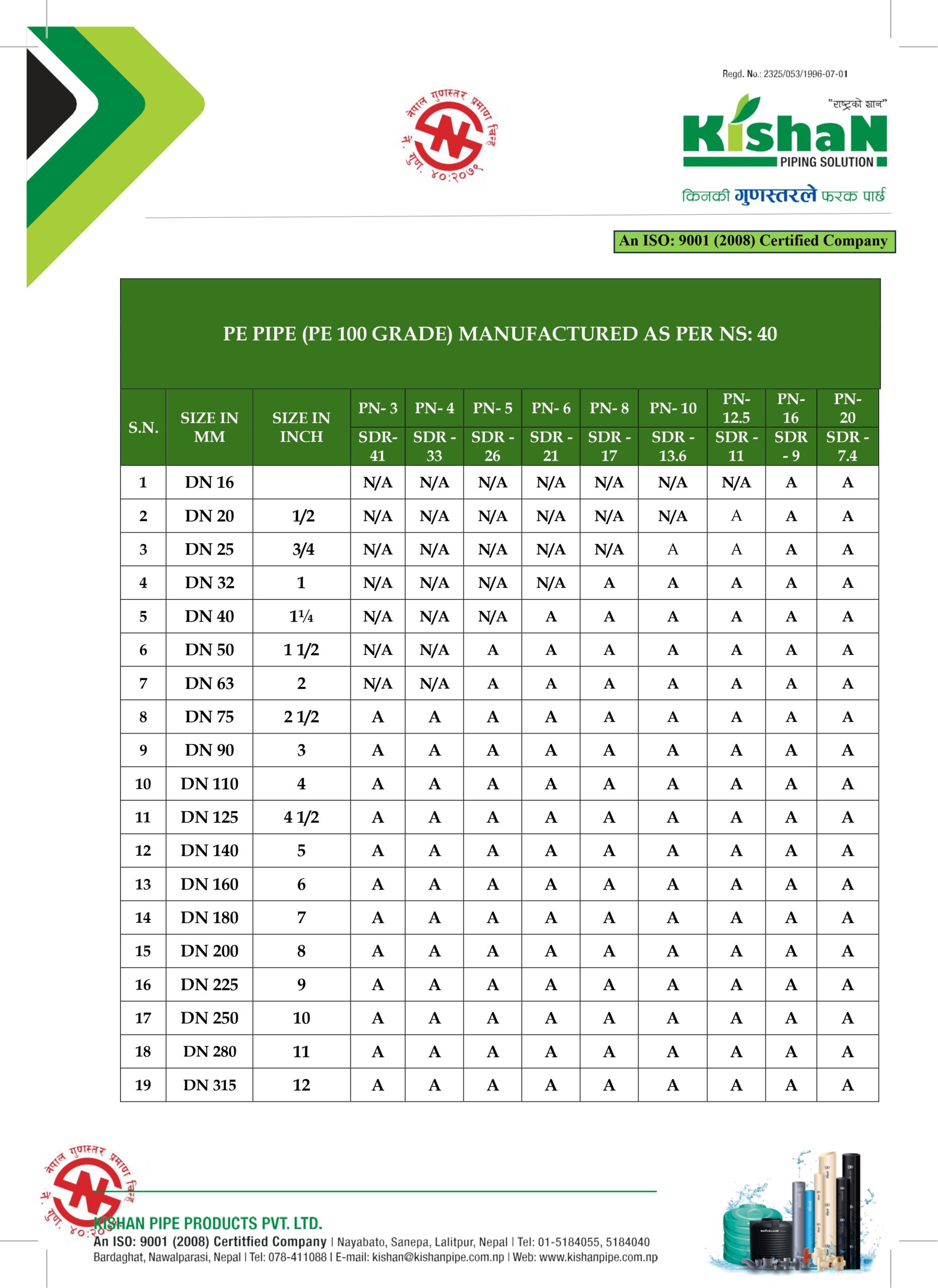
When researching HDPE pipe price in Nepal, buyers should also understand product specifications. HDPE pipes are not one-size-fits-all. They are available in multiple diameters and pressure classes, depending on application requirements, which also affect the price. Kishan Pipe manufactures PE 100 Grade HDPE Pipes as per NS 40 standard, ensuring quality, durability, and pressure-tested performance.
Available Size Range
PE 100 Grade HDPE pipes are available from:
- DN 16 mm
- Up to DN 315 mm
This wide range allows usage in:
- Small household supply lines
- Agricultural irrigation systems
- Underground municipal pipelines
- Industrial water transport systems
Understanding PN Rating and SDR in HDPE Pipes
When comparing HDPE pipe in Nepal, you will often see terms like:
- PN 3
- PN 4
- PN 6
- PN 8
- PN 10
- PN 12.5
- PN 16
- PN 20
These refer to pressure ratings. A higher PN rating indicates a higher pressure-handling capacity.
Similarly, SDR (Standard Dimension Ratio) defines wall thickness relative to diameter. Lower SDR means a thicker wall and higher pressure strength.
For example:
- PN-20 (SDR 7.4) → High-pressure applications
- PN-10 (SDR 13.6) → Medium-pressure systems
- PN-6 (SDR 21) → Low-pressure irrigation
Understanding these classifications helps buyers evaluate value beyond just hdpe pipe price in Nepal.
Choosing the Right Size and Pressure Class
Before checking hdpe pipe price in Nepal, determine:
- Required flow capacity for your project
- Pressure level of the water system
- Underground vs surface installation
- Agricultural vs municipal application
For example:
- DN 20 to DN 63 →Household and small distribution
- DN 90 to DN 160 → Used in community supply lines
- DN 200+ →Irrigation and larger water supply project
Selecting the wrong PN or SDR class may result in performance issues regardless of price
Why PE 100 Grade Manufacturing Standards Matter
When evaluating HDPE pipe prices in Nepal, the manufacturing standard is just as important as the cost. Kishan Pipe’s PE 100 Grade HDPE pipes are manufactured as per NS 40 certification, ensuring:
- High tensile strength
- Consistent wall thickness
- Pressure resistance
- Long service life
- Suitability for Nepal’s climate conditions
Whether it is irrigation demand in the Terai, underground installations in hilly regions, or municipal supply systems, PE 100 Grade pipes provide long-term structural reliability. Instead of choosing solely on short-term price comparisons, buyers should prioritize certified, performance-tested pipes that meet Nepal’s environmental and pressure requirements.
Recommended Read: PVC Pipe Price in Nepal 2025: What Affects Cost & How to Choose
Recommended Read: Factors Affecting Water Tank Price in Nepal and How to Choose Wisely
How to Get the Best HDPE Pipe Price in Nepal Without Compromising Quality
Kishan Pipe is committed to manufacturing high-quality PE 100 Grade HDPE pipes in Nepal as per NS 40 standards. With a wide range of sizes and pressure ratings, the company focuses on consistent quality control, certified raw materials, and reliable performance across irrigation, municipal, and industrial applications. By combining technical expertise with strict manufacturing standards, Kishan Pipe ensures long-term durability and dependable pipeline solutions suited to Nepal’s diverse terrain and water system requirements.
Explore our Products:
Ensure your project uses certified, quality-tested HDPE pipes. Contact us today for complete technical details and expert guidance tailored to your requirements.
📞 Call us: 01-5184040, 9779801106035
Conclusion
Understanding HDPE pipe price in Nepal involves more than just comparing numbers. It requires insight into:
- Material quality and product grade
- Seasonal demand and supply cycles
- Transportation and logistics
- Long-term project needs
- Quality and certification
A smart buyer balances cost expectations with performance needs. By focusing on quality, regional conditions, and purpose-built pipe selection, you ensure durability, reliability, and a plumbing or irrigation system that lasts.
FAQs
-
What factors affect HDPE pipe prices?
Several factors influence HDPE pipe price in Nepal, including:
- Raw material grade (PE 100 vs lower grades)
- Pipe diameter (DN size)
- Pressure rating (PN class)
- Wall thickness (SDR value)
- Manufacturing standard (NS 40 compliance)
- Market demand and transportation costs
Higher pressure-rated pipes (such as PN 16 or PN 20) require thicker walls and more material, which increases overall HDPE pipe cost. Certified pipes manufactured to national standards may also cost more due to strict quality control processes.
-
What sizes of HDPE pipes are available in Nepal?
HDPE pipes in Nepal are commonly available in sizes ranging from small (DN 16 mm) to large (DN 315 mm and above). The required size depends on water flow capacity and project requirements.
-
How to check HDPE pipe quality?
To verify HDPE pipe quality, check the following:
- Markings printed on the pipe (PN rating, SDR, size)
- Compliance with NS 40 or relevant manufacturing standards
- Raw material grade (PE 100 recommended)
- Uniform wall thickness
- Manufacturer details and batch number
Certified pipes undergo pressure testing and dimensional inspection, ensuring reliability and durability
-
What is the maximum pressure for HDPE pipe?
The maximum pressure depends on the pipe’s PN rating.
For example:
- PN 6 → Suitable for low-pressure systems
- PN 10 → Medium-pressure applications
- PN 16 → High-pressure water systems
- PN 20 → Very high-pressure industrial or municipal applications
The actual working pressure should match the system requirements and installation conditions. Higher PN-rated pipes are designed to handle greater internal pressure safely.
-
What is PE 100 Grade in HDPE pipes?
PE 100 Grade is a high-strength polyethylene material used in HDPE pipes. It offers better pressure resistance, greater durability, and a longer service life than lower grades such as PE 63 or PE 80. PE 100 pipes are widely preferred for water supply and irrigation systems in Nepal.
- Is HDPE pipe better than PVC pipe?
Both HDPE and PVC pipes are used for different applications, and each has its own specialty depending on project requirements. HDPE pipes are generally more durable and impact-resistant, making them ideal for underground installations, irrigation systems, and high-pressure applications. On the other hand, PVC pipes are commonly used for lower-pressure plumbing systems, drainage, and indoor water supply lines. The right choice depends on the specific application, pressure requirement, and installation conditions.