Corporate: Sanepa, Lalitpur, Nepal Factory: Bardaghat, Nawalparasi, Nepal

Factors Affecting Water Tank Price in Nepal and How to Choose Wisely
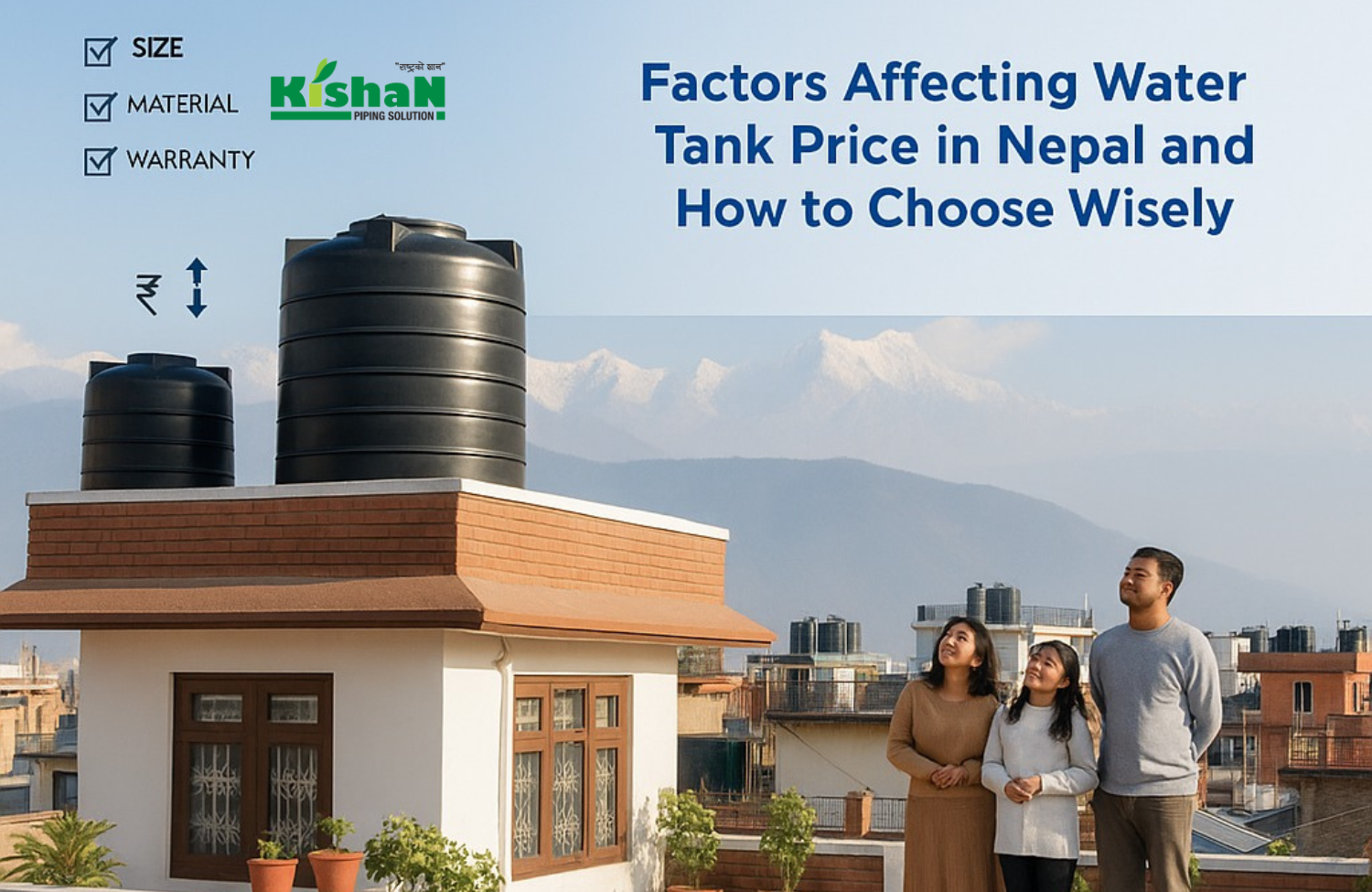
Water is an essential part of every home, office, and industry in Nepal. With frequent shortages and the need for safe storage, choosing the right water tank has become a top priority for families and businesses. When people search for water tank price in Nepal, they often expect a fixed number, but the reality is different. Prices vary depending on factors such as material, size, brand, and durability. Instead of focusing only on cost, it is important to understand what makes a tank valuable in the long run.
In this blog, we’ll explore the main factors that affect water tank prices in Nepal and guide you on selecting the best option for your needs.
1. Material of the Water Tank
The first factor influencing the price of water tanks in Nepal is the material used. Different tanks are made from different plastics, each with its own strengths:
- HDPE (High-Density Polyethylene): Known for toughness, UV resistance, and long-lasting use. These are widely used water tanks in Nepal.
- PVC (Polyvinyl Chloride): Lightweight and cost-friendly but better suited for smaller needs.
- Plastic (Food-grade): Safe for drinking water and ideal for household use.
If you are looking for the best water tank in Nepal, always check if the material is safe, durable, and suitable for the local climate.
2. Capacity of the Tank
The size you choose has a direct impact on the price. A large-capacity water tank naturally costs more because it uses more material and is designed for higher strength.
Common household tanks in Nepal range from 500 liters to 2000 liters, while businesses or industries may need 5000 liters or more. When deciding, think about your family size, water supply frequency, and space availability. For homes with daily shortages, investing in a large-capacity water tank can be a smart long-term decision.
3. Number of Layers
Another important factor is the number of layers in a tank. You’ll find tanks labeled as single-layer, double-layer, or triple-layer.
- Single Layer: Basic protection, mostly for temporary or low-demand use.
- Double Layer: Better strength and durability, ideal for most households.
- Triple Layer: Provides UV protection, keeps water cool, and lasts longer in harsh weather.
If you are looking for the best water tank, going for multi-layer tanks is often the wisest choice. While they may cost a bit more, they ensure water safety and longevity.
4. Brand Reputation
When searching for water tank in Nepal, you’ll find many local and international brands. The reputation of the manufacturer plays a big role in pricing.
A trusted brand like Kishan Pipe offers tanks that meet quality standards, use certified materials, and provide after-sales support. Unknown or cheap alternatives may save money at first but often lead to leaks, cracks, or replacement costs later.
Choosing a reliable brand ensures peace of mind and long-term savings, even if the initial investment seems higher.
5. Design and Technology
Modern water tanks in Nepal are designed not just for storage but also for better hygiene and durability. Features like anti-bacterial layers, UV protection, and stronger lids influence the price.
Advanced technology makes sure your water remains safe from contamination and keeps its natural taste intact. While plain tanks may be cheaper, they might not offer the same health benefits.
6. Transportation and Installation
The total cost of a water tank in Nepal is not just about the purchase. Transportation and installation also play a role. Larger tanks may need careful handling and professional setup, which adds to the overall cost.
When comparing the water tank price in Nepal, make sure to ask whether delivery and installation are included. This helps you avoid hidden expenses later.
7. Warranty and Durability
A tank that comes with a warranty often costs more, but it provides extra assurance. Since a water tank is a long-term investment, always check the warranty period and the durability claims.
The best water tank in Nepal is one that not only stores water but also ensures safety for years without frequent repairs.
How to Choose Wisely
Now that we understand the main factors that affect the water tank price in Nepal, here are some tips for making the right choice:
- Check Your Needs: Decide how much water your family or business uses daily. This helps you pick the right size.
- Prioritize Quality: Don’t just focus on the price. A cheap tank may cost more in repairs or replacements over time.
- Go for Trusted Brands: Choose manufacturers with a good reputation for quality and service.
- Look for Extra Features: Multi-layer protection, food-grade materials, and UV resistance are worth the investment.
- Think Long-Term: A large capacity water tank or a higher-quality brand may cost more upfront but saves money in the future.
Why Choose Kishan Pipe Water Tanks?
At Kishan Pipe, we understand that every home and business in Nepal deserves safe and reliable water storage. Our tanks are:
- Made from high-quality, food-grade materials
- Designed for strength, safety, and long-term use
- Available in a wide range of sizes and capacities
- Built with multi-layer technology for durability
When you think about the best water tank in Nepal, Kishan Pipe stands as a trusted choice.
Final Thoughts
The water tank price in Nepal depends on many factors—material, size, layers, brand, and design. Instead of choosing only by cost, focus on durability, safety, and long-term value. A well-chosen tank ensures your family or business has a steady supply of clean water for years.
If you are looking for the best water tank in Nepal, explore Kishan Pipe’s range and find the perfect solution for your needs, or you can contact us. Whether it’s a small household tank or a large capacity water tank, choosing wisely today will save you from worries tomorrow.
FAQs – Water Tank Price in Nepal & Kishan Pipe Tanks
1: Why does the water tank price in Nepal vary so much?
Prices depend on size, material (plastic, steel, etc.), brand, features (like UV protection), and warranty. Bigger, stronger, safer tanks cost more — but save you money long-term.
2: Are Kishan Pipe tanks safe for drinking water?
Yes! All tanks are made with food-grade, BPA-free materials — 100% safe for storing drinking water.
3: How long do Kishan Pipe tanks last?
With proper care, 10–15 years or more. Built with multi-layer tech and UV resistance, they’re made to last through Nepal’s weather.
4: Do you offer a warranty?
Yes! We stand by our tanks. Warranty periods vary by model — ask us for details.
5: What size tank do I need?
For a family of 4–5, 1000–1500 litres is usually enough. Businesses or bigger homes may need 2000L+. We can help you pick the right size.
6: Are cheap tanks a good deal?
Not really. Low-cost tanks often crack, leak, or fade fast — costing you more in repairs or replacements. Better to invest once in quality.