Corporate: Sanepa, Lalitpur, Nepal Factory: Bardaghat, Nawalparasi, Nepal

Borewell Casing Pipe in Nepal: HDPE vs UPVC vs GI Compared
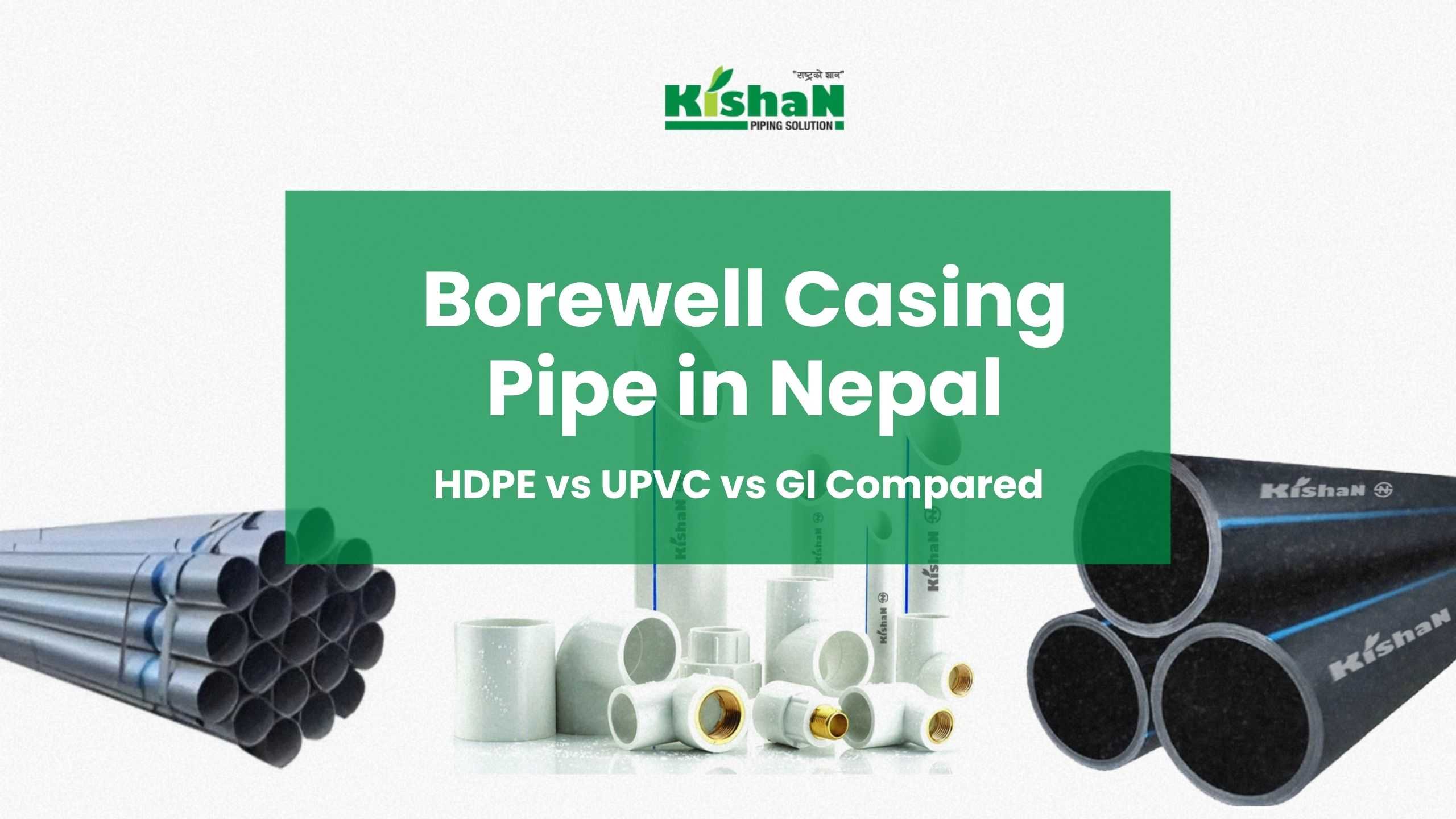
A tube well is only as strong as the pipe inside it. Across Nepal, from Kathmandu to the Terai, many wells fail early because the wrong borewell casing pipe was chosen.
A collapsed well. A pipe stuck 60 meters underground. Dirty water leaking through a rusted pipe. Fixing any of these costs a lot of money and can leave a family or a farm without water for weeks.
This guide compares HDPE, UPVC, and GI in simple words, so you can pick the right casing pipe Nepal builders and farmers trust, the first time. Whether you need drinking water at home or a tube well for irrigation Nepal style farm, the answers are below.
Quick Answer:
The best borewell casing pipe for most wells in Nepal is HDPE or UPVC.
- HDPE pipes bend without breaking, so they suit sandy or shifting soil and deeper wells.
- UPVC pipes are light, clean, and easy to join, so they suit shallow to medium wells.
- GI pipe is strong but rusts over time, so it is used far less today.
Match the pipe to your soil, well depth, and water use, and always choose a pipe that carries a recognized quality standard.
What Is a Borewell Casing Pipe and Why Does Every Well Need One?
Think of a borewell casing pipe as the wall inside a hole. When a driller makes a borehole deep into the ground to reach an aquifer (an underground layer that holds water), the loose soil wants to fall back in. The casing pipe stops that from happening.
Every good tube well pipe system does these jobs:
- Stops sand and soil from caving into the well
- Keeps dirty water out of your drinking water source
- Guides the submersible pump straight down
- Gives the well a long life, so you do not have to drill again
Without casing, groundwater extraction becomes a short-lived, muddy mess. That is why casing is never optional.
Column Pipe vs Casing Pipe vs Screen Pipe: What Is the Difference?
People mix these three up all the time, so let us clear it up. The column pipe vs casing pipe confusion is one of the most common mistakes buyers make.
- Casing pipe: the outer lining that holds the borehole open.
- Column pipe: the pipe that carries water from the submersible pump up to the surface.
- Screen pipe (also called slotted pipe): a pipe with tiny openings. It sits where the water is, lets water in, and keeps sand out.
A finished well usually uses all three. Plain casing goes through the loose soil, and the screen pipe or slotted pipe sits in the water-bearing layer.
HDPE vs UPVC vs GI: Which Casing Material Is Right for You?
HDPE Casing Pipe is flexible and Built for Nepal’s Soil. HDPE casing pipe is made from a tough, bendy plastic. It is a favorite where the ground moves or is sandy.
- Bends a little instead of cracking in shifting soil
- A corrosion-resistant pipe, so it never rusts
- Resists many chemicals found in groundwater
- Light enough to carry to hill and rural sites
- Long service life when installed correctly
UPVC Casing Pipe: Light and Corrosion-Free
UPVC casing pipe is a rigid plastic pipe. It is popular for homes and small farms.
- Smooth inside, so slime and bacteria find it hard to stick
- A lead-free pipe when made from good-quality compound, which matters for drinking water
- Easy to join with solvent cement
- Best for shallow to medium depth wells
GI Pipe for Borewell: The Old Standard, Fading Fast
GI pipe for borewell use was the norm many years ago. Metal is strong, but it has weak spots.
- Heavy, so it is harder to transport and lower into the well
- Rusts over time, especially in acidic or salty groundwater
- Rust can change the taste and color of your water
- Costs more in the long run because of repairs and replacement
Quick Comparison Table
| Feature | HDPE | UPVC | GI |
| Corrosion resistance | High | High | Low |
| Weight | Light | Light | Heavy |
| Typical lifespan | (Approx) 50+ years | (Approx) 25 to 30 years | (Approx) 10 to 15 years |
| Best for | Deep wells, unstable soil | Shallow to medium wells | Older or industrial sites |
Lifespans are typical figures for well-installed pipe. Real life depends on water quality, soil, and installation.
Casing Pipe Size Chart: How to Pick the Right Diameter
Size matters here. A pipe that is too small chokes the water flow. A pipe that is too big wastes money. A simple rule: the casing should be about 1 to 2 inches wider than your pump.
Here is a simple casing pipe size chart to start with:
| Common casing size | Usually fits | Typical use |
| 4 inch (about 100 mm) | Small 3-inch pumps | Home drinking water |
| 5 to 6 inch (125 to 150 mm) | 4-inch pumps | Homes and small farms |
| 8 inch (200 mm) and above | Large pumps | Big irrigation and community wells |
Two more things affect your choice:
- Pipe wall thickness: deeper wells push harder on the pipe, so they need thicker walls.
- SDR rating: a number that tells you how thick the wall is compared to the pipe size. A lower SDR means a thicker, stronger wall. Learn more in our guide to pipe pressure ratings (PN and SDR).
This chart is a general guide. Always confirm the final size with your driller, because borewell depth and pump type change the answer.
Tube Well for Irrigation Nepal Farmers Need to Know About
A tube well for irrigation Nepal farms depend on has to work every season. The Terai is a great place for this because Terai groundwater is fairly shallow. But the ground there brings its own challenges:
- Sandy soil and river-laid layers can cave in easily
- The water table drops in the dry months
- Sand in the water can wear down cheap pipe
- An irrigation pump runs for long hours, so the pipe must handle constant use
This is why many farmers prefer HDPE in the plains. It flexes in sandy soil and handles sediment well. In hilly areas with rocky strata, drillers often need stronger, thicker-walled pipe.
A real example: a well in Chitwan was drilled to about 125 meters, but the casing pipe could only be lowered to 60 meters before it jammed. Cases like this show why the right diameter, a straight borehole and good pipe all matter.
Borewell Pipe Price in Nepal: What Changes the Cost?
Everyone starts by asking about borewell pipe price in Nepal. The honest answer is that the price depends on several things:
- Material: HDPE, UPVC, or GI
- Diameter: bigger pipes cost more
- Wall thickness: thicker walls use more material
- Depth needed: more meters means more pipe
- Transport distance from the factory to your site
Location matters too. For borewell pipe Kathmandu projects, wells are often drilled deeper because groundwater in the valley has dropped in many areas. Deeper wells usually need stronger, higher-rated pipe than shallow wells in the Terai.
Prices change with raw material costs, so please contact Kishan Pipe for current rates instead of trusting an old number online.
NS Certification and IS 12818: Why Standards Matter
A standard is a set of quality rules. A pipe that follows them has been tested for strength, wall thickness, and safety. This matters because a bad pipe can crack under pressure or release harmful chemicals into your water.
- NS certified pipe: made to Nepal Standard rules.
- IS 12818 standard: the Indian standard for UPVC casing and screen pipes, which many buyers use as a quality benchmark.
Good standards help you get a leak-proof casing that lasts. Before you buy, ask the seller to show the certification for the exact pipe size you want. Kishan Pipe manufactures to NS requirements [team to confirm certificate details for the casing range before publishing].
Also Read: https://kishanpipe.com.np/blog/nepal-standard-pipes-in-nepal/
Common Borewell Casing Pipe Problems and How to Avoid Them
Most water pipe problems in homes and borewells are avoidable. Here are the big ones:
- Pipe gets stuck halfway down
- Cause: wrong diameter or a bent borehole.
- Fix: check that the borehole is straight before lowering, and pick a size with enough room.
- Pipe cracks under pressure
- Cause: wall too thin for the borewell depth.
- Fix: choose the right wall thickness or SDR for your depth.
- Dirty or smelly water
- Cause: poor pipe jointing or non-food-grade pipe.
- Fix: use clean, well-made joints and pipe suitable for drinking water.
- Well collapse
- Cause: no casing in loose layers, or the wrong pipe type for the soil.
- Fix: case the loose sections fully and use a proper borewell casing pipe from the start.
A simple rule to remember: ask your driller to check that the borehole is straight and clean before any pipe goes in, and keep the pipe’s certificate or marking until the job is finished. Ten minutes of checking at the start can save you weeks of repair work later.
Where Kishan Pipe Fits in Your Borewell and Tube Well Project
Choosing the borewell casing pipe is only the first step. Once the well is drilled, water still has to travel from the pump to your tank, your taps, or your fields. That is where Kishan Pipe can help.
Kishan Pipe has served Nepal for over 30 years, and its factory is in Bardaghat, in the Terai, where many tube wells are drilled. The team knows the soil and water conditions these systems face.
Whether you pick HDPE casing pipe or UPVC casing pipe for the well itself, you will still need reliable pipes for the rest of the system, including the best plumbing pipes for home water supply:
- NS 40 HDPE pipes for underground water lines, drinking water supply, and farm irrigation
- NS 206 uPVC pipes for household cold water supply and drainage
- NS 353 water tanks for safe and clean storage
- Advice from the team on the right pipe size and pressure rating for your project
Since the pipe runs from your pump to your tank or field, using NS-certified pipe here means fewer leaks and fewer repairs. Kishan Pipe is available through 500+ authorized dealers and 1,000+ retailers across Nepal, so supply is easy to find. Customers in Kathmandu can also reach the Sanepa, Lalitpur corporate office.
Conclusion
For decades, your well, water, and money are all protected by the proper borewell casing pipe. The ideal tube well pipe depends on your soil, depth, and purpose. For the majority of wells, HDPE or UPVC is superior to conventional GI pipe. Are you prepared to make a good plan? For a quote or site guidance, get in touch with Kishan Pipe.
Follow Kishan Pipes on social media channels such as YouTube, Facebook, and Instagram for the Latest updates.
Frequently Asked Questions
1. Which pipe is best for borewell casing?
For most wells in Nepal, HDPE or UPVC is best. HDPE suits deep wells and shifting sandy soil. UPVC suits shallow to medium wells and drinking water. Both resist rust, which is why people are moving away from GI pipe.
2. How deep can PVC casing pipe go?
PVC casing is commonly used for wells of roughly 100 to 150 meters, but the real limit depends on wall thickness and pipe class. Deeper wells need thicker walls. Always check the manufacturer’s rating for your depth.
3. Why does casing pipe get stuck in a borewell?
Usually, the borehole is bent or narrower than expected, or the casing is too wide for the hole. Loose soil falling in can also block it. Drillers can prevent this by keeping the hole straight and choosing the right diameter.
4. What is the difference between casing pipe and column pipe?
Casing pipe lines the borehole so it does not collapse. Column pipe carries water from the pump up to the surface. They serve different functions, and a working well usually needs both.
5. How much does borewell casing pipe cost in Nepal?
Cost depends on material, diameter, wall thickness, depth, and transport. Deeper wells, such as many projects on borewell pipe Kathmandu projects, need more or stronger pipe. Contact Kishan Pipe for current updates.
6. Can HDPE pipe be used for borewell casing?
Yes. HDPE is used for casing, especially in sandy or unstable ground, because it flexes instead of cracking. Choose the correct Nepal Standard pipe (SDR) rating for your depth so the wall is strong enough.
7. Is PVC or steel better for well casing?
For most homes and farms, PVC is better. It does not rust, is lighter, and often costs less over time. Steel or GI is very strong, but rust can affect water quality and shorten its life.
8. How much casing is required for a borewell?
Casing must cover all loose or unstable layers, from the top down to firm ground. In sandy Terai soil, that can mean most of the well. Your driller will decide the exact length after checking the soil layers. Ranging from 20 to 40 feet in hard rock regions and the full depth in loose or sandy soil