Corporate: Sanepa, Lalitpur, Nepal Factory: Bardaghat, Nawalparasi, Nepal

HDPE Pipes in Nepal’s Hydropower Projects: Applications, Specs & Why Kishan Pipe is the Trusted Choice
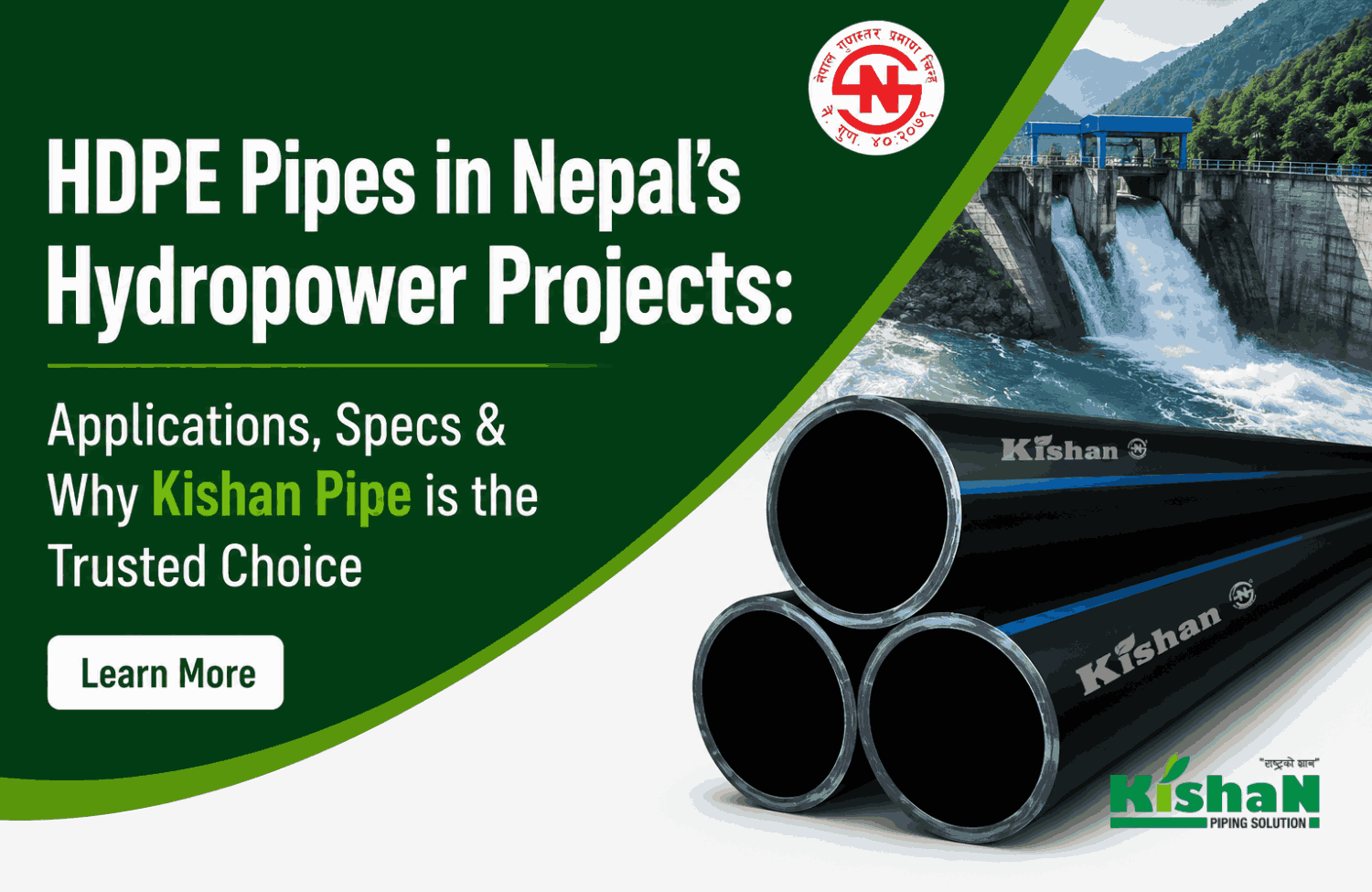
Nepal is one of the most water-rich countries in the world, with an estimated hydropower potential of over 83,000 MW, of which approximately 43,000 MW is technically and economically feasible. With dozens of projects under construction at any given time, from small run-of-river schemes in the hills to large-scale reservoirs, the demand for reliable piping infrastructure has never been greater.
But here’s what often gets overlooked: the success of a Nepal hydropower project depends not just on turbines and generators. It depends equally on the quality of pipes used throughout the project, for drainage, water conveyance, site supply, and civil infrastructure. Choose the wrong pipe, and you face leaks, pressure failures, and costly repairs in often remote, difficult-to-access locations.
This is why HDPE (High-Density Polyethylene) pipes have become the material of choice in Nepal’s hydropower sector, and why Kishan Pipe has been supplying them to major projects nationwide for decades.
Why Nepal Hydropower Projects Need Specialized Piping
Most hydropower projects in Nepal are built in challenging conditions, including steep terrain, seismically active zones, extreme monsoon rainfall, and remote locations far from urban supply chains. These conditions place severe demands on any piping system:
- High water pressure in conveyance lines
- Soil movement and ground shifting in hilly areas
- Exposure to UV, chemicals in soil, and moisture
- Long runs of pipe through forests and rocky terrain, where joints must be leak-proof
- Difficult transport logistics, lightweight pipes are significantly easier to carry to remote sites
Standard metal or GI pipes, while still used in some penstock applications, struggle with corrosion, weight, and joint integrity in these conditions. HDPE, on the other hand, was designed specifically for this environment.
Where HDPE Pipes Are Used in Nepal Hydropower Projects
HDPE pipes serve multiple functions across a Nepal hydropower project site. Here are the key application areas:
1. Drainage and Seepage Control
Around dam structures, tunnels, and powerhouse foundations, controlling groundwater and seepage is critical. HDPE perforated and solid drainage pipes are used to channel water away from structures before it can compromise foundations or tunnel linings. Their resistance to soil chemicals and long service life, often exceeding 50 years, make them ideal for buried drainage applications.
2. Water Conveyance and Headrace Lines
In run-of-river hydropower projects, water is diverted from a river intake and conveyed through a headrace channel or pipe to the powerhouse. Where open channels are impractical, such as on steep cliffs or through unstable ground, HDPE pressure pipes provide a sealed, reliable alternative. Their fusion-welded joints create a completely leak-free system, which is essential when conveying large volumes of water over long distances.
3. Site Water Supply and Camp Infrastructure
During construction, hydropower sites house hundreds of workers. A reliable water supply system is needed for drinking water, sanitation, and construction activities. HDPE pipes are used extensively for these site water supply networks, typically in smaller diameters (32mm–110mm). Their food-grade safety makes them suitable for drinking water, and their durability allows quick installation even on uneven ground.
4. Access Road Culverts and Stormwater Drainage
Access roads to hydropower sites must manage heavy monsoon runoff. HDPE culvert pipes are buried under access roads to channel stormwater and prevent road washouts. Their high impact resistance and flexibility allow them to handle the loads of heavy construction vehicles without cracking, a common failure point for rigid concrete or GI alternatives.
5. Tailrace and Discharge Lines
After water passes through the turbines, it is discharged back into the river through a tailrace. HDPE pipes are used in tailrace infrastructure to manage this discharge in a controlled manner, particularly in projects where space constraints require piping rather than open channeling.
Key Technical Specifications: What to Look for in HDPE Pipes for Hydropower
When specifying HDPE pipes for hydropower applications, engineers typically evaluate the following parameters:
1. Pressure Rating (PN Class)
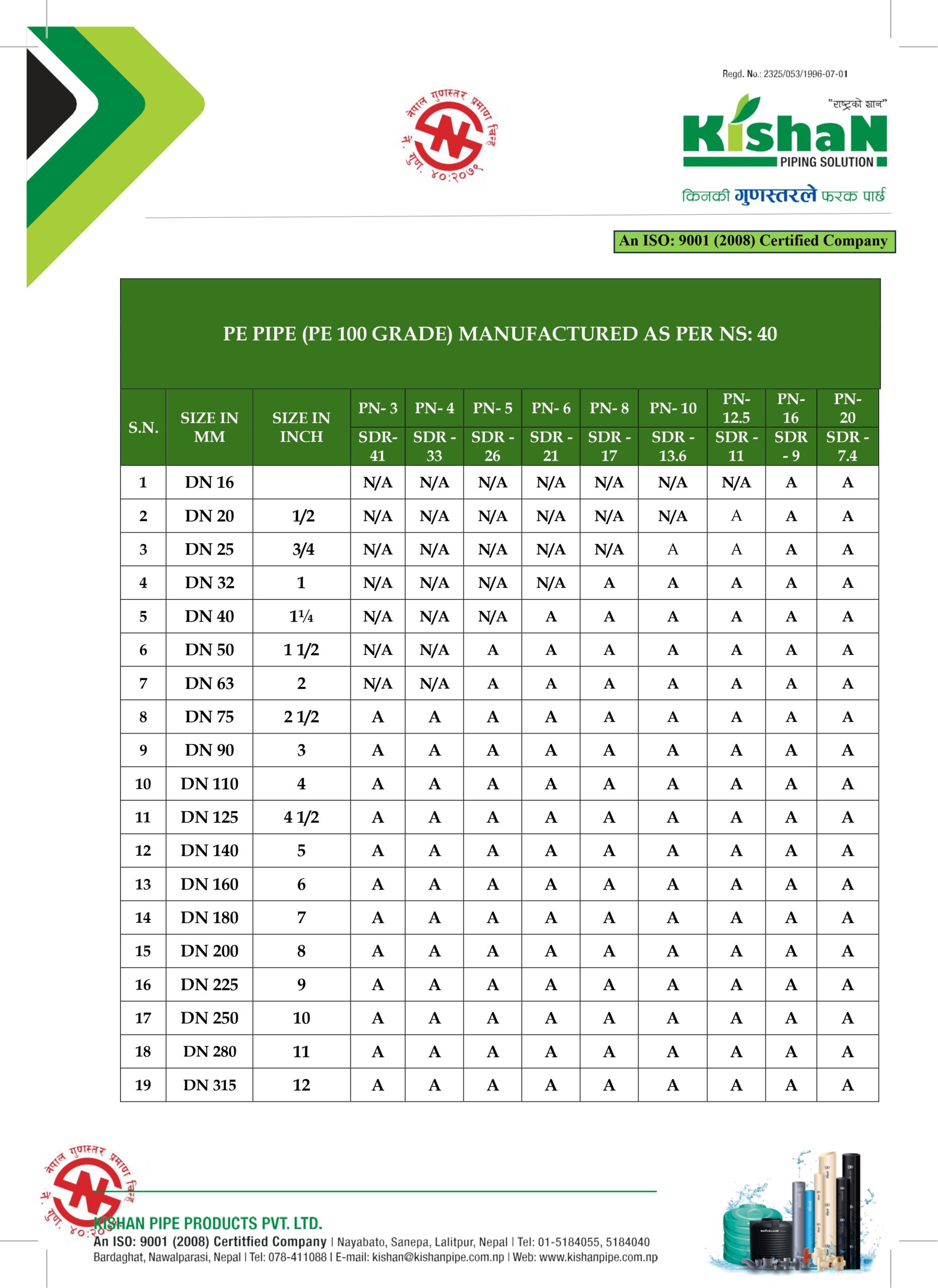
HDPE pipes are available in different pressure classes, expressed as PN (Pressure Nominal) ratings:
- PN6, suitable for low-pressure drainage and gravity-fed water supply
- PN10, standard water supply and irrigation lines
- PN16, higher pressure applications, including water conveyance under significant head
- PN20, high-pressure lines where the water head exceeds 160 meters
For most hydropower drainage and site supply applications, PN10 and PN16 pipes are standard. Kishan Pipe manufactures HDPE pipes across all these pressure classes, ensuring the right specification is available for every application.
2. Diameter Range
Nepal Hydropower projects require pipes across a wide range of diameters, depending on the application, from small 32mm lines for site plumbing to large 630mm+ pipes for major drainage or conveyance. Kishan Pipe produces HDPE pipes across a comprehensive diameter range, enabling sourcing of all sizes from a single trusted supplier rather than managing multiple vendors at a remote project site.
3. Jointing Method
One of the most critical advantages of HDPE in hydropower applications is the butt fusion jointing method. Unlike threaded or rubber-ring joints that can fail under pressure or ground movement, butt fusion creates a monolithic, fully welded joint that is as strong as the pipe itself. This is essential in hydropower settings where a joint failure in a remote drainage line could go undetected and cause significant erosion or structural damage.
4. Material Grade: PE80 vs PE100
Modern HDPE pipes are manufactured from either PE80 or PE100 grade polyethylene. PE100 offers higher pressure resistance and a longer service life at the same wall thickness, making it the preferred choice for pressure applications in hydropower. Kishan Pipe uses PE100 grade material for its HDPE pressure pipes, meeting international quality standards.
Get complete details on Kishanpipe HDPE pipe sizes (in mm and inches), pressure ratings (PN), and pricing.
Why HDPE Outperforms Other Pipe Materials in Hydropower Settings
1. Flexibility in seismic terrain
Nepal’s hills and mountains are seismically active. HDPE’s natural flexibility allows it to absorb ground movement without cracking, a critical advantage over rigid PVC or concrete pipes in earthquake-prone areas.
2. Corrosion resistance
Unlike GI or steel pipes that rust and degrade in wet, acidic soils common in Nepal’s hill regions, HDPE is completely immune to corrosion. A buried HDPE drainage pipe will perform for 50+ years without any degradation.
3. Lightweight for remote sites
Getting materials to a hydropower site in the mountains often involves porter lines, helicopter drops, or narrow mountain roads. HDPE pipes weigh significantly less than steel or GI; a 100mm HDPE pipe weighs roughly one-eighth of its steel equivalent, dramatically reducing transport cost and logistics complexity.
4. No scaling or biofilm buildup
The smooth inner wall of HDPE pipes resists mineral scaling and biological buildup, maintaining flow efficiency throughout the pipe’s lifetime.
5. Low total cost of ownership
While the upfront cost of quality HDPE may be comparable to alternatives, eliminating corrosion, joint maintenance, and replacement costs over a 50-year project life makes HDPE significantly more economical.
Kishan Pipe in Nepal’s Hydropower Sector: Proven on Real Projects
Kishan Pipe is not just a pipe manufacturer; it is a proven supplier to some of Nepal’s most demanding hydropower infrastructure projects. With over 30 years of manufacturing experience and a factory in Bardaghat, Nawalparasi, Kishan Pipe has supplied HDPE pipes and fittings to multiple major hydropower sites across Nepal, including:
- Khimti-I Hydropower Plant, Dolakha and Ramechhap
- Rolwaling Khola Hydroelectric Project, Dolakha
- Dordi Khola Hydroelectric Project
- Rudi Khola Project, Lamjung
- Powerhouse tunnel infrastructure projects
These are not pilot projects; these are live, operating hydropower plants generating electricity for Nepal’s national grid. The pipes supplied by Kishan Pipe operate under real-world conditions: monsoon floods, seismic activity, and remote mountain terrain. That track record is what sets Kishan Pipe apart from suppliers who only sell pipes without understanding the environments in which they are used.
What Makes Kishan Pipe the Right Partner for Nepal Hydropower Project?
1. Nepal-made, Nepal-tested
Kishan Pipe manufactures all products at its factory in Bardaghat, Nawalparasi, not imported, not generic. Every pipe is produced and quality-tested for Nepal’s specific conditions.
2. NS Certified Quality
All Kishan HDPE pipes carry Nepal Standard (NS) certification, ensuring they meet the minimum quality and pressure specifications required for infrastructure projects in Nepal.
3. Full diameter and pressure class range
From 32mm site water supply lines to large-diameter drainage pipes, Kishan Pipe covers the full range needed across a Nepal hydropower project lifecycle.
4. Nationwide distribution and bulk supply capability
With a strong dealer network across Nepal and direct factory supply options, Kishan Pipe can reliably deliver bulk orders to even remote project locations.
5. 30+ years of institutional knowledge
Kishan Pipe’s engineering and supply team understands the demands of civil infrastructure projects in Nepal. They can advise on the right specifications, pressure classes, and installation methods for your project’s specific conditions.
Quick Specification Guide for Project Engineers
If you are specifying HDPE pipes for a hydropower project in Nepal, here is a quick reference:
- Drainage and seepage control: HDPE PN6 or PN10, 110mm–315mm, solid or perforated
- Site water supply (drinking): HDPE PN10, food-grade, 32mm–110mm
- Access road culverts: HDPE PN10 or double-wall corrugated, 200mm–630mm
- Water conveyance under pressure: HDPE PN16 or PN20, PE100, diameter per flow calculation
- Tailrace discharge: HDPE PN10, large diameter, fusion-jointed
Not sure which specification suits your project? Contact Kishan Pipe’s technical team for guidance before you finalize your procurement plan.
Conclusion
Nepal’s hydropower ambitions are vast, and so is the infrastructure needed to realize them. HDPE pipes play a quiet but essential role in every project, from the first drainage line laid during site preparation to the final water supply connections at the powerhouse. Choosing the right pipe and the right supplier matters more than most project planners realize until something goes wrong.
Kishan Pipe brings 30+ years of Nepal-specific manufacturing experience, NS-certified quality, and a proven track record on real hydropower projects to every order. Whether you are a project engineer specifying materials for a new scheme, a contractor managing site infrastructure, or a procurement manager looking for a reliable bulk supplier, Kishan Pipe has the products and expertise to support your project.
Planning a hydropower or infrastructure project in Nepal?
Contact us today for HDPE pipe specifications, bulk pricing, and technical support.
Call us: 01-5184040, 9779801106035
Email admin@kishanpipe.com.np.
You can also visit our corporate office in Sanepa, Lalitpur, or our factory in Bardaghat, Nawalparasi.