Corporate: Sanepa, Lalitpur, Nepal Factory: Bardaghat, Nawalparasi, Nepal

Why CPVC Pipes Are the Smart Choice for Reliable Plumbing
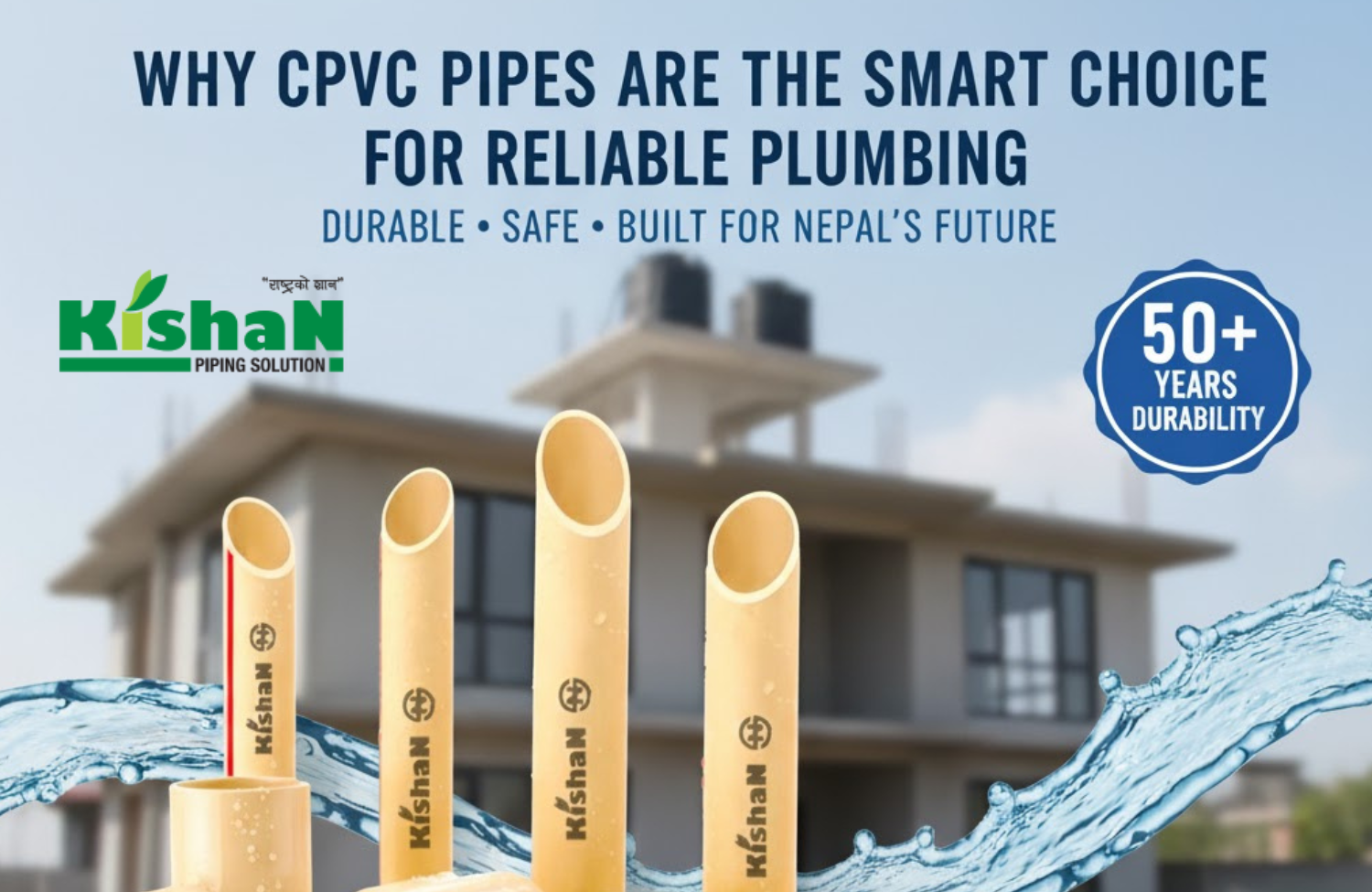
In today’s construction world, finding the right piping system is more important than ever. From small homes to large commercial buildings, every project needs a safe, durable, and long-lasting plumbing solution. Among the many types available, CPVC pipes have become a preferred choice for modern builders and homeowners.
This blog explains what makes CPVC pipes unique, their benefits, applications, and why Kishan Pipe’s products are trusted across Nepal for consistent performance and quality.
What Are CPVC Pipes?
CPVC (Chlorinated Polyvinyl Chloride) is an advanced form of PVC that undergoes a chlorination process, making it stronger and more resistant to heat and chemicals. Unlike normal PVC, CPVC pipes can handle both hot and cold water supply, which makes them suitable for diverse plumbing needs.
They are lightweight, easy to install, and designed to last for years without corrosion or scaling. Because of these qualities, CPVC pipes are now widely used in residential, commercial, and industrial plumbing systems in Nepal.
Key Benefits of Using CPVC Pipes
Choosing CPVC pipes and fittings comes with several long-term advantages. Below are the main reasons why they have become the preferred choice among Nepali builders and households.
1. High Heat Resistance
CPVC pipes can withstand high temperatures, making them ideal for hot water systems. Unlike PVC, which may deform under heat, CPVC retains its shape and strength even when water temperatures rise.
2. Corrosion and Chemical Resistance
Traditional metal pipes often rust or corrode over time, especially in regions with varying water quality. CPVC pipes resist chemical reactions, preventing rust, scale, and bacterial growth. This ensures a clean and safe water supply for years.
3. Long Service Life
One of the biggest strengths of CPVC is its durability. When installed properly, CPVC pipes can last more than 50 years. They are built to handle pressure, temperature changes, and long-term water flow without losing performance.
4. Smooth Flow and No Scaling
CPVC’s smooth interior surface minimizes friction and prevents scaling. As a result, water flows steadily through the pipe without blockage or pressure loss—ensuring consistent water pressure across all outlets.
5. Lightweight and Easy to Install
Compared to metal pipes, CPVC pipes are much lighter. They require no heavy tools or welding, which reduces labor costs and installation time. The joining process is simple — using a reliable solvent cement ensures leak-free connections.
6. Cost-Effective and Low Maintenance
Though slightly costlier than regular PVC, CPVC pipes are more economical over time. Their long life and minimal maintenance make them a cost-saving choice for households and builders alike.
Applications of CPVC Pipes
CPVC pipes are suitable for a wide range of uses in Nepal’s construction and plumbing sectors.
- Residential Homes: For both hot and cold water supply systems.
- Apartments and Hotels: Consistent water pressure and temperature resistance make CPVC ideal for high-rise buildings.
- Commercial Buildings: Reliable for internal plumbing and central water systems.
- Industrial Use: Excellent resistance to chemicals and temperature makes CPVC suitable for manufacturing units and processing plants.
- Fire Sprinkler Systems: In certain systems, CPVC is used due to its heat-resistant properties.
Whether you’re building a small home or a large commercial complex, CPVC pipes offer flexibility, safety, and reliability in every application.
CPVC vs Other Plumbing Materials
When selecting a piping system, understanding the difference between CPVC and other materials helps you make the right choice.
| Feature | CPVC | PVC | Galvanized Iron (GI) | Copper |
| Temperature Resistance | High (up to 93°C) | Moderate | High | Very High |
| Corrosion Resistance | Excellent | Good | Poor | Good |
| Water Safety | Safe for drinking water | Safe for cold water | May rust | Safe |
| Installation | Easy | Easy | Difficult | Skilled labor needed |
| Maintenance | Very low | Low | High | Moderate |
From this comparison, it’s clear that CPVC pipes combine the best features of other materials while avoiding their weaknesses.
Installation Tips for CPVC Pipes
Proper installation plays a key role in achieving the best results from CPVC pipes. Here are a few best practices:
- Cut Cleanly: Use a pipe cutter to make clean, square cuts.
- Deburr and Smooth Edges: Remove any burrs or rough edges before joining.
- Use Quality Solvent Cement: Apply solvent evenly on both pipe and fitting surfaces for a tight seal.
- Allow Time to Set: Give joints enough time to cure before testing water flow.
- Avoid Direct Sunlight: For outdoor installation, cover or insulate exposed sections to protect from UV rays.
Following these steps helps ensure leak-free, durable plumbing that lasts for decades.
Why choose Kishan Pipe CPVC pipes and fittings
Kishan Pipe has built a strong reputation in Nepal’s plumbing sector by consistently delivering dependable products. Every CPVC pipe and fitting is crafted from durable, high-grade materials and carefully tested for strength, temperature resistance, and long-term reliability. The company offers a broad selection of pipes, fittings, and accessories that suit residential buildings, commercial spaces, and industrial systems alike. With reliable distribution across Nepal and dedicated customer support, Kishan Pipe remains a trusted choice for quality plumbing solutions.

Sustainability and Future Outlook
As Nepal continues to modernize, sustainable infrastructure has become a priority. CPVC pipes support this goal by lasting longer, reducing maintenance waste, and improving water efficiency. Their production process also uses less energy compared to metal alternatives, making them a greener choice for the future.
With rising demand for durable, non-corrosive, and cost-effective materials, CPVC pipes are expected to dominate the plumbing market in the coming years.
Conclusion
CPVC pipes offer the perfect balance of strength, safety, and reliability. They resist heat, corrosion, and chemicals — ensuring smooth water flow and long service life. Whether you are upgrading your home plumbing or working on a large construction project, CPVC pipes from Kishan Pipe provide unmatched performance and peace of mind.
For durable, high-quality plumbing solutions in Nepal, trust Kishan Pipe — the name that stands for quality, innovation, and reliability. Contact Us today
FAQs About CPVC Pipes
1. Are CPVC pipes safe for drinking water?
Yes. CPVC pipes are non-toxic and do not leach harmful substances, making them completely safe for carrying drinking water.
2. Can CPVC pipes handle hot water?
Absolutely. CPVC pipes can withstand temperatures up to 93°C, making them perfect for hot water systems in homes and hotels.
3. What is the lifespan of CPVC pipes?
With proper installation, CPVC pipes can last for over 50 years without significant wear or corrosion.
4. Can CPVC pipes be used outdoors?
Yes, but it’s recommended to cover them or use UV-resistant coatings to protect from sunlight exposure.
5. What sizes are available for CPVC pipes?
Kishan Pipe offers a full range of sizes and fittings suitable for all types of plumbing applications.