Corporate: Sanepa, Lalitpur, Nepal Factory: Bardaghat, Nawalparasi, Nepal

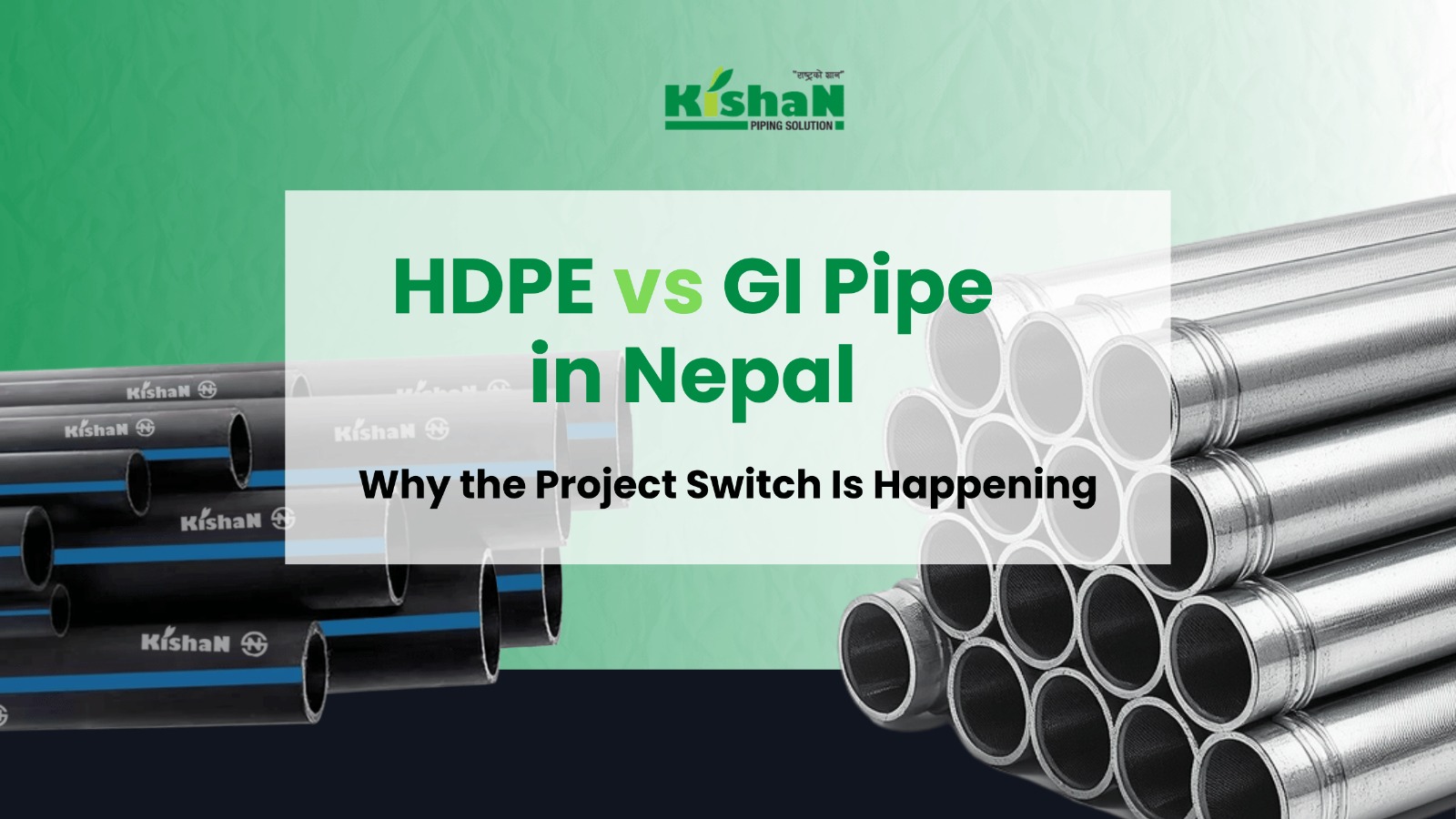
HDPE vs GI Pipe in Nepal: Why the Project Switch Is Happening
If you have ever seen brown, rusty water coming out of a tap, you have already met the biggest problem with old GI pipes. Over time, the inside of a GI pipe rusts, and that rust mixes with the water flowing through your home. It is not just annoying; it can mean higher repair costs, unsafe drinking water, and the painful job of digging up floors or roads just to replace a pipe that was buried years ago.
This is exactly why HDPE pipe is now replacing GI pipe across Nepal, from small homes to massive government projects. In this blog, we will break down HDPE vs GI Pipe in Nepal in the simplest way possible, using real numbers, real comparisons, and real Nepali projects so you can see exactly why this switch is happening, and which pipe is right for you.
What Is a GI Pipe? Why It Is Nepal’s Most Popular Plumbing Pipe
GI pipe stands for Galvanized Iron pipe. In simple words, it is a steel pipe with a thin layer of zinc coating on top, added to slow down rusting.
For decades, GI pipe in Nepal was the go to choice for homes, offices, and even old government water lines. Here’s why it became so popular:
- Strength: Steel pipes felt tough and reliable
- Easy availability: Almost every hardware shop in Nepal stocked it
- Familiarity: Plumbers and builders had used it for generations, so nobody questioned it
But GI pipe has some real problems that show up after a few years:
- Galvanized iron corrosion: the zinc layer wears off over time, and the steel underneath starts to rust from the inside
- Heavy weight: makes transport and installation harder, especially in hilly areas
- Reaction with water: in areas with acidic or mineral-rich groundwater, rusting happens even faster
- Leaky joints: GI pipes are joined using screw-in threads, and these threaded joints loosen and leak as the pipe ages
Even with these issues, GI pipe price in Nepal stayed attractive for a long time because it looked cheaper upfront. But as we’ll see, “cheaper now” doesn’t always mean “cheaper later.”
What Is HDPE Pipe?
HDPE pipe stands for High-Density Polyethylene pipe. Don’t let the long name scare you; it simply means a strong, flexible plastic pipe made from a tough type of plastic called polyethylene pipe PE100 grade material.
Think of it like this: instead of a stiff metal straw, imagine a strong, bendy plastic hose that doesn’t crack, doesn’t rust, and can flex slightly without breaking.
Here’s how HDPE pipe in Nepal is different from GI pipe:
- No screw-in joints: HDPE pipes are joined using a heat fusion joint, where the pipe ends are heated and melted together into one solid piece. There’s no threaded weak point to leak
- Doesn’t rust: since it’s plastic, there’s no metal to corrode
- Lightweight: much easier to transport, especially to hilly or remote parts of Nepal
- Flexible: it can bend slightly with ground movement instead of cracking
- Long-lasting: a properly installed HDPE pipe is often rated for a long service life pipe (50+ years), far beyond what most GI pipes achieve in real conditions
This combination of strength, flexibility, and zero rusting is exactly why HDPE pipe price in Nepal, while sometimes higher upfront, ends up being the smarter long-term investment.
HDPE vs GI Pipe in Nepal: Head-to-Head Comparison
Let’s put both pipes side by side so you can see the real difference clearly.
| Feature | HDPE Pipe | GI Pipe |
| Corrosion resistance | Does not rust | Rusts over time, even with zinc coating |
| Weight & installation | Lightweight, easier to install | Heavy, harder to carry and install |
| Joint type | Heat fusion joint (solid, leak-resistant) | Threaded joints (can loosen/leak) |
| Pressure handling | Rated by pressure rating (PN class) and pipe wall thickness | Fixed strength, weakens as it rusts |
| Lifespan | 50+ years with proper installation | Often needs replacement within 15-20 years |
| Price | Slightly higher upfront (HDPE pipe price in nepal) | Lower upfront (gi pipe price in nepal) |
| Best use case | Water supply, drainage, irrigation, large projects | Older homes, short-term or low-budget setups |
So, when it comes to the best pipe for plumbing in Nepal, the table tells the real story: GI pipe might save you money on day one, but HDPE pipe saves you money, water, and stress over the next 20-30 years. For most homes and all serious infrastructure work, HDPE is simply the smarter, safer choice.
Where Is HDPE Pipe Used in Nepal’s Biggest Projects?
This isn’t just a theory; HDPE pipe for water supply is already the backbone of some of Nepal’s most important projects. This is where experience and real evidence matter, not just claims.
Hydropower Projects
Nepal’s hydropower sector relies heavily on HDPE pipe for water management around dams, tunnels, and powerhouses. Kishan Pipe itself has directly supplied pipes for real hydropower projects including:
- Khimti-I Hydro Power Plant
- Rolwaling Khola Hydroelectric Project, Dolakha
- Rudi Khola and Dordi Khola projects in Lamjung
- Powerhouse Big Tunnel project
In these projects, HDPE pipe is used for dewatering lines, water management systems, and drainage around powerhouse and tunnel construction jobs where a pipe simply cannot afford to rust or crack underground.
Government Water Supply Schemes
Big national efforts like the Melamchi Water Supply Project and many rural water supply scheme programs across Nepal now rely on HDPE pipe to carry clean water over long distances without contamination from rust.
Roads, Bridges & Urban Growth
Nepal is currently investing heavily in infrastructure. The government’s Nepal infrastructure budget 2026 includes major spending on the Strategic Road Network (SRN), ongoing road rehabilitation in Nepal, and large-scale bridge construction in Nepal. It’s worth being clear here: HDPE pipe isn’t used to build the actual bridge or dam structure, which is steel and concrete. But it plays a critical role in the drainage, culverts, and water supply lines built alongside these projects.
As one of the active HDPE pipe manufacturers in Nepal, Kishan Pipe has a direct, on-ground history supplying these growing infrastructure needs, not just claiming expertise, but showing it through real, named projects.
Why Is Nepal Making the Switch Now?
Thus, is this change occurring now rather than 10 years ago? A few genuine explanations stand out:
- Cost over lifetime reasoning: Although GI pipe may appear less expensive now, the price of replacement, repairs, and water damage quickly mount up. HDPE eliminates the majority of these long-term expenses at a somewhat higher initial cost.
- Durability under seismic and ground movement: Since Nepal is located in an earthquake-prone area, HDPE’s flexible, fused joints are significantly more resilient to slight ground movements than stiff, threaded GI joints.
- Evidence from large-scale projects: HDPE operates dependably even in demanding, high-pressure construction situations, as demonstrated by the Upper Tamakoshi hydropower project.
- Growing towns and cities: As Nepal’s towns expand, the need for reliable underground water distribution is growing fast, and HDPE is built for exactly this kind of large-scale, long-term use
Put simply: Nepal isn’t just switching pipes because HDPE is “new and trendy.” It’s switching because the pipe is proving itself, project after project.
How to Check If Your HDPE Pipe Is Genuine (NS 40 Certified Pipe)
Not every HDPE pipe sold in the market is equally reliable. This is where certification matters a lot.
Nepal Standard (NS) 40-certified pipe simply means the pipe has passed Nepal’s official quality and safety testing standards; it’s not just a sticker; it’s proof the pipe can actually handle the pressure and conditions it’s meant for.
The points listed below are a simple checklist before you buy:
- Check for clear Nepal Standard (NS) certification markings printed directly on the pipe
- Ask your dealer for proper paperwork or a certificate of quality
- Avoid unusually cheap pipes; they’re often made from recycled or low-grade plastic
- Buy from a known HDPE pipe manufacturer in Nepal with a real, verifiable factory and project history
This same certification matters just as much when the pipe is being used for drainage and sewerage in Nepal, since low-quality pipes here can cause bigger, messier problems underground where they’re hard to fix.
Which Pipe Should You Choose?
If you’re building a new home, upgrading old plumbing, or working on a bigger project, the comparison is clear: If you’re looking for a trusted HDPE pipe manufacturer in Nepal, Kishan Pipes provides NS 40-certified HDPE pipes that have been supplied to major hydropower, water supply, and infrastructure projects across the country.
Nepal’s own hydropower projects, government water schemes, and growing infrastructure work are already proving this shift is real, not just a sales pitch. When you’re ready to choose the best pipe for plumbing in Nepal, going with a trusted HDPE pipe manufacturer in Nepal with a real project history is one of the smartest decisions you can make for your home or project.
Frequently Asked Questions
1. Is HDPE pipes better than GI pipe?
Yes, most of the time. In addition to using stronger heat-fused joints rather than threaded joints, HDPE pipe has a longer lifespan and does not corrode. HDPE is a safer long-term option, however GI pipe can still be suitable for short-term or inexpensive needs.
2. What is the price difference between HDPE and GI pipe in Nepal?
GI pipe price in Nepal is usually lower upfront, while HDPE pipe price in Nepal is slightly higher initially. However, HDPE saves money over time by avoiding rust-related repairs and early replacement.
3. How long does HDPE pipe lasts as compared to GI pipe?
According to ISO 4427 and PE100 industry standards, properly installed HDPE pipelines are designed for a service life exceeding 50 years under recommended operating conditions.
4. Why are government projects in Nepal switching to HDPE pipe?
Government and hydropower projects are choosing HDPE pipe because it resists corrosion, handles ground movement better during earthquakes, and has proven reliable in real projects like Khimti-I and the Melamchi Water Supply Project.
5. Is GI pipe still in use?
In fact, some low-budget systems and older homes still employ GI pipe. But as more individuals and initiatives realize the long-term advantages of HDPE pipe, it is gradually being replaced.