Corporate: Sanepa, Lalitpur, Nepal Factory: Bardaghat, Nawalparasi, Nepal

Water Tank Placement in Nepal: Rooftop, Underground, or Ground Level?
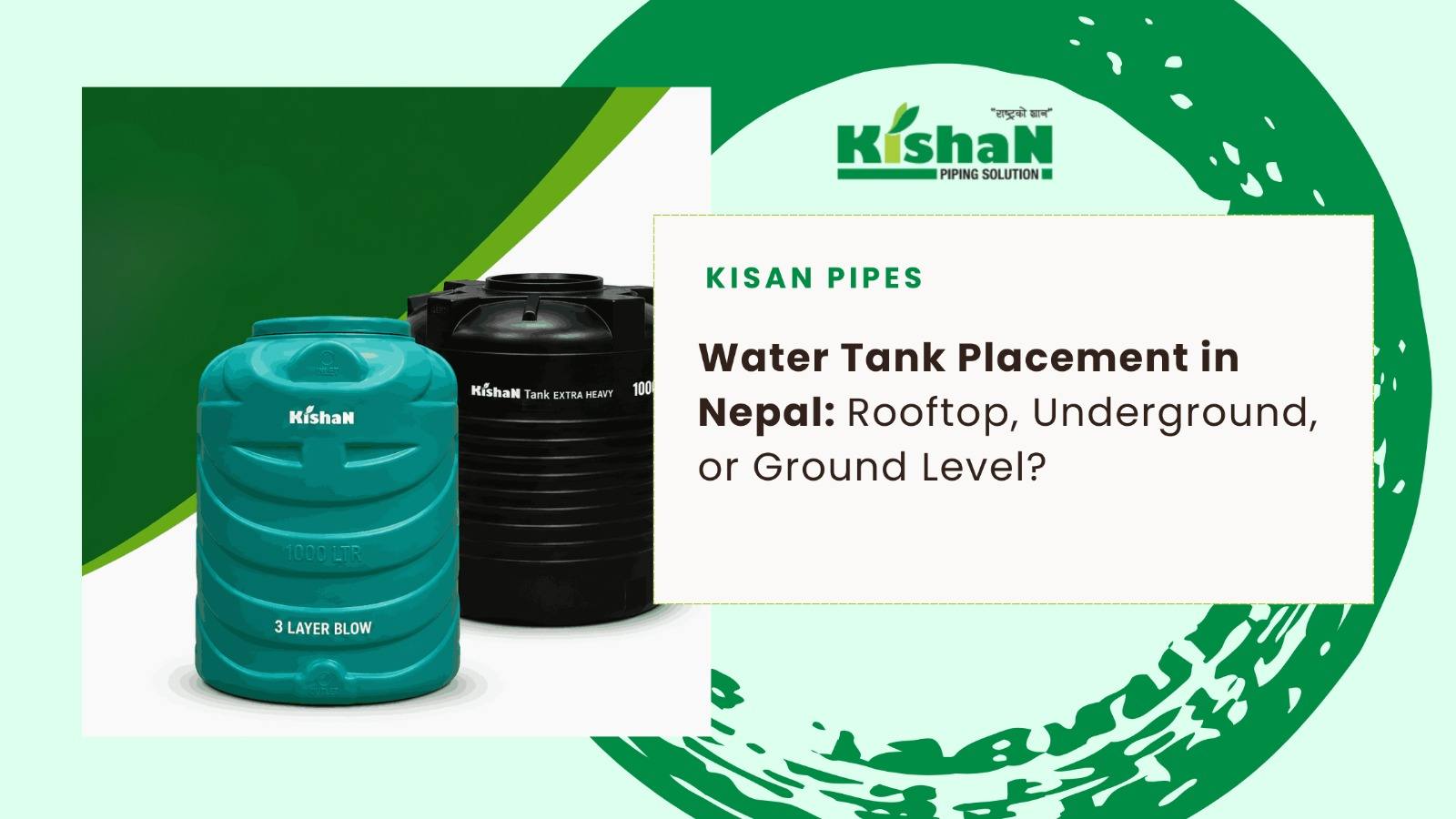
Where you place your water tank matters more than most people realise. Water tank placement in Nepal directly affects your water pressure, pipe lifespan, hygiene, and monthly electricity bill. The right position depends on your house type, floor count, terrain, and the pipe system connected to it. This guide covers all three placement options so you can make the right call before construction or your next tank replacement.
Water tank placement options for Nepali homes showing rooftop, underground, and ground level positions
Why Water Tank Placement Deserves More Attention Than It Gets
Most homeowners in Nepal choose a tank position out of habit or contractor convenience. The tank goes on the roof because “everyone does it that way,” or underground because the plot is small. That logic works until your top-floor shower runs at a trickle, your underground tank floods during monsoon, or your pipes corrode from the wrong pressure load.
Tank placement is a system decision, not just a storage decision. It determines:
- How much water pressure reaches your taps and showerheads
- Which pipe materials you need and what diameter
- Whether you need a pump, and how powerful it should be
- How safe your stored water stays over time
- How easy the tank is to clean and maintain
Get the placement right from the start and everything downstream works better, literally.
The Three Main Water Tank Positions Explained
Rooftop tank: Installed on the terrace or a raised platform above the building. Uses gravity to deliver water pressure without a pump for most floor levels.
Underground tank: Built into the ground, usually near the foundation or in the front yard. Requires a pump to push water up to the building. Common in areas with limited rooftop space or high seismic risk.
Ground-level tank: Placed at or just above ground level, often used in commercial setups, factories, or flat-terrain properties. Also requires a pump for most residential applications.
Rooftop Water Tanks: The Most Common Choice in Nepal
Rooftop water tank installation on a concrete terrace in Nepal, with pipe connections visible. Rooftop placement is the default for most Nepali homes, and there are solid reasons for that.
Why rooftop tanks work well:
- Gravity pressure is free. Every metre of height above your tap delivers roughly 0.1 bar of water pressure. A tank placed 10 metres above a ground-floor tap delivers approximately 1 bar, which is sufficient for standard fittings.
- No pump is needed for most floor levels, which reduces electricity costs significantly over the tank’s lifespan.
- Easy to inspect and clean compared to underground tanks.
- Works well with CPVC pipes for hot and cold water routed from the tank to bathrooms and kitchens.
Where rooftop placement falls short:
- Structural load is a real concern. A 1,000-litre tank filled with water weighs approximately 1,000 kg. A 2,000-litre tank weighs close to 2,000 kg. Your roof slab must be designed to handle this, and many older Nepali homes were not built with this load in mind.
- Pressure drops on the top floor. If your tank sits only 1 to 2 metres above the top-floor bathroom, pressure will be weak. Solar heaters and mixer showers require a minimum pressure that a low-mounted rooftop tank often cannot deliver.
- UV exposure and temperature swings affect tank quality over time. This is why tank material matters: a high-quality, UV-stabilised polyethylene tank lasts significantly longer in Nepal’s sun-intense climate than cheaper alternatives.
- Earthquake risk. A heavy tank at height adds to seismic load. Proper anchoring is essential in Nepal’s seismic zones.
Rooftop tank is ideal for: 2 to 3 storey homes with a properly designed roof slab, households that want gravity-fed pressure without a pump, and properties in urban or semi-urban Nepal where space on the ground is limited.
Underground Water Tanks: Smart for the Right Situation
Underground tanks are built below the ground surface and are increasingly popular in Kathmandu Valley plots where rooftop structural load is a concern or where architects want a clean roofline.
Why underground tanks make sense:
- Zero structural load on the building above.
- Better protection from UV degradation and temperature extremes, which can extend the effective life of stored water.
- Ideal as a collection reservoir for municipal water supply or borewell water, which is then pumped up to rooftop or overhead tanks.
- Works well as a sump tank in a two-tank system: underground for storage, rooftop for distribution.
The challenges of underground placement in Nepal:
- A pump is always required. Every litre of water needs to be pushed upward, which adds electricity costs for the lifetime of the tank. In areas with frequent load-shedding, this also means you need a backup power arrangement.
- Nepal’s monsoon season creates waterlogging risk. An underground tank in a low-lying area or a property with poor drainage can experience external water pressure on the tank walls, leading to seepage or structural damage to the tank itself.
- Cleaning is harder. Underground tanks require a proper manhole access point and are more physically demanding to inspect and scrub regularly.
- Pipe runs from underground to the building must be HDPE pipes for underground water supply , which handle soil movement and moisture well. Standard PVC pipes are not recommended for underground supply lines in areas with active soil or seismic activity.
Underground tank is ideal for: Properties where rooftop structural load is a concern, large-capacity storage needs (above 5,000 litres), two-tank distribution systems, and borewell-fed properties.
Ground-Level Tanks: When Does This Option Make Sense?
Ground-level tanks are less common in residential Nepal but serve a clear purpose in specific scenarios.
- Small farms and agricultural properties where the tank feeds drip irrigation or sprinkler systems via a pump.
- Commercial and industrial properties with high-volume storage needs.
- Temporary construction site water storage.
- Properties in very flat terrain where digging underground is impractical.
For standard residential use in Nepal, ground-level placement is generally the least convenient option because it always requires a pump and offers no gravity advantage.
How Tank Placement Affects Your Pipe Material Choice
This is the connection most people miss. Where your tank sits determines what pressure your pipes handle, which in turn determines what pipe material you should use.
From a rooftop tank:
- Cold water lines to bathrooms and kitchens: UPVC pipes for plumbing are the standard choice. They handle typical gravity-fed pressures well and are cost-effective.
- Hot water lines from geysers or solar heaters: CPVC pipes are essential here. UPVC has a lower heat tolerance and should not be used for water above 60 degrees Celsius.
From an underground or ground-level tank:
- The underground supply line from tank to pump and up through the building requires HDPE pipes. HDPE handles soil pressure, ground movement, and seismic activity far better than any other pipe material used in Nepal.
- Pump outlet lines inside the building can then transition to CPVC for hot water zones and UPVC for cold water distribution.
Nepal’s pipe and fittings market offers all three materials, but quality varies significantly between manufacturers. NS-certified pipes from established Nepali manufacturers are the standard to insist on, particularly for underground and high-pressure applications where substandard pipe can fail without visible warning.
Nepal-Specific Considerations Every Homeowner Should Factor In
- Earthquake risk: Nepal sits in one of the world’s most active seismic zones. A rooftop tank must be properly anchored with a steel frame bolted into the slab, not simply placed. Underground tanks must be designed to resist lateral soil pressure during ground movement.
- Monsoon flooding: Properties in low-lying areas of the Terai or valley floors should avoid underground tanks unless the tank is specifically rated for external hydrostatic pressure and the site has proper drainage infrastructure.
- Hilly terrain: Many properties in the hills of Nepal naturally have gravity-feed potential from a tank placed at a higher point on the plot rather than on the roof. This is an underused option that eliminates rooftop load concerns entirely.
- Municipal water supply patterns: Kathmandu and many urban areas receive municipal water for limited hours per day. Underground sump tanks that collect municipal supply and pump it to a rooftop tank are now the standard setup in many Kathmandu households for this exact reason.
Choosing the Right Tank Capacity for Your Placement
Water tank capacity guidelines for Nepali homes (based on standard household consumption):
- 2 to 3 people: 500 to 750 litres
- 4 to 6 people: 1,000 to 1,500 litres
- 7 to 10 people: 2,000 litres or more
- Commercial or apartment buildings: custom assessment required
How to find the ideal water tank size for your home
Kishan Water Tanks are manufactured in a range of capacities from 200 litres to 10,000 litres, using food-grade, UV-stabilized polyethylene that meets Nepal Standard requirements. Each tank is designed for rooftop and ground-level placement, with underground models available for sump applications.
View the full Kishan water tank range
Quick Decision Guide: Which Placement Is Right for You?
- Choose rooftop if your roof slab is structurally rated for the load, you have 2 or more floors, and you want gravity pressure without a pump.
- Choose underground if you are building a two-tank system, have a borewell, want to protect your roofline, or need large-capacity storage above 3,000 litres.
- Choose ground-level if you are managing agricultural irrigation, a commercial property, or a temporary installation.
When in doubt, consult a licensed plumber or structural engineer before finalising placement, especially for rooftop installations on existing buildings.
Frequently Asked Questions
Does a rooftop water tank affect water pressure?
Yes. Every metre of height between the tank and the tap generates roughly 0.1 bar of pressure. A tank placed 8 metres above a tap delivers around 0.8 bar, which is adequate for standard fittings but may be insufficient for high-pressure showers or solar water heaters that require 1 bar or more.
Which water tank placement is best for Kathmandu homes?
A two-tank system works best for most Kathmandu households: an underground sump tank to collect irregular municipal supply, and a rooftop tank for gravity-fed distribution. This ensures continuous availability and consistent pressure.
Can I install an underground water tank in Nepal’s monsoon zone?
Yes, but the tank must be rated for external hydrostatic pressure and the site must have proper drainage. Standard polyethylene tanks designed for above-ground use should not be used underground without engineering guidance.
What pipe should I use to connect a rooftop water tank?
Use CPVC pipes for hot water lines and UPVC or HDPE pipes for cold water supply lines. For underground connections from a sump tank to a pump, HDPE pipes are the correct choice due to their flexibility and resistance to soil movement.
How often should a water tank be cleaned, regardless of placement?
Every 6 months is the recommended cleaning frequency for any water tank in Nepal, regardless of placement. Rooftop tanks accumulate dust and bird contamination. Underground tanks are prone to sediment buildup and algae if not properly sealed.